Key Takeaways
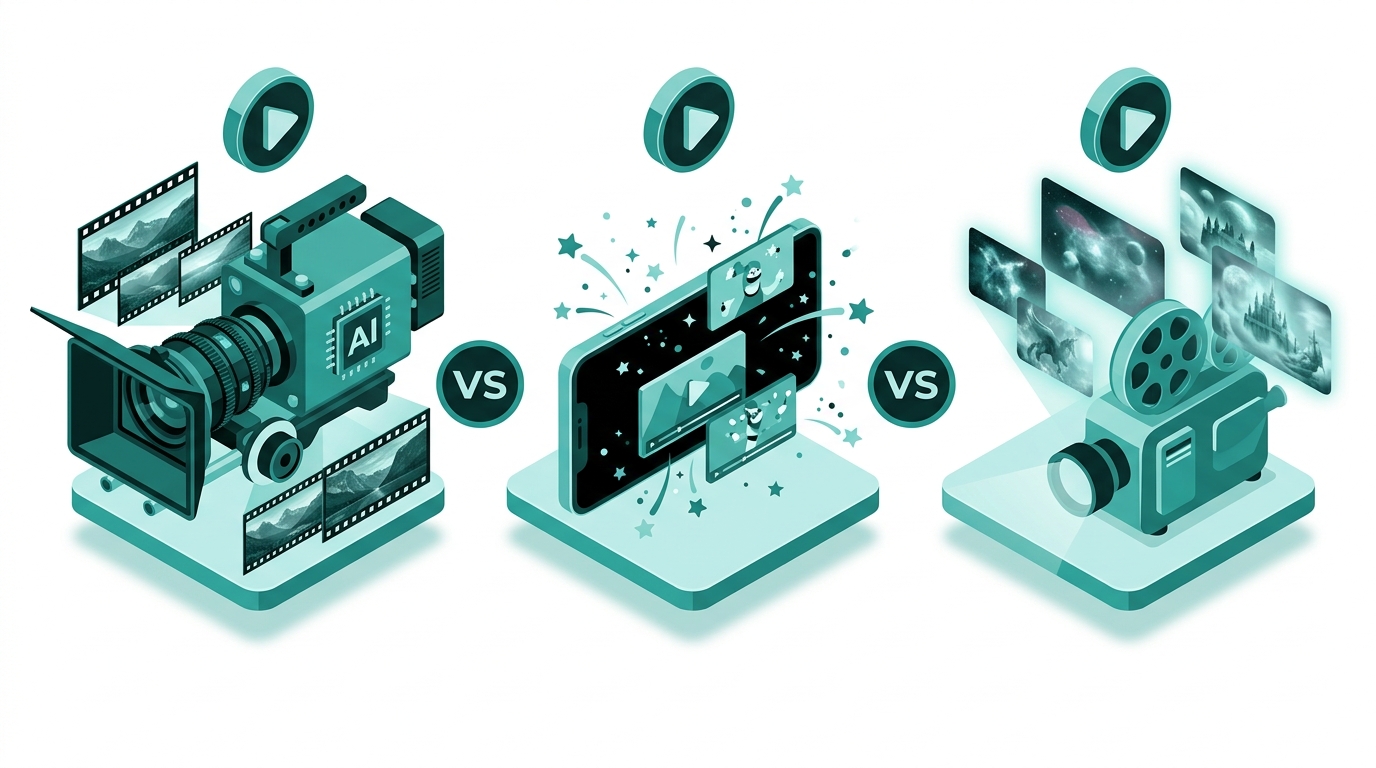
- Kling AI (by Kuaishou Technology) generates videos up to 3 minutes long at 1080p and is best for photorealistic, cinematic content with precise motion control.
- Pika Labs (version 2.2 as of early 2025) focuses on short, stylized clips with creative effects including Pikaframes, Pikaswaps, and over 30 Pikaffects, making it ideal for social media content.
- Luma Dream Machine produces high-quality image-to-video outputs with exceptional 3D depth and camera movement, drawing on the team’s NeRF research background.
- Kling AI’s paid plans start at $10/month (Standard, 660 credits), while Pika Labs starts at $8/month billed annually ($10/month billed monthly), and Luma Dream Machine’s entry paid plan is $30/month.
- All three tools offer a free tier, though Luma’s free plan is the most generous at 500 credits per month, and Kling gives 66 free credits daily.
- Pika Labs renders clips in 30-60 seconds, making it the fastest of the three for quick iteration; Kling free-tier users can wait hours for a single clip.
- For commercial use, Kling and Pika allow it on Standard/paid plans, while Luma requires at least the Plus plan ($30/month) for any business application.
- Kling AI 3.0 (released 2025) now supports 4K resolution and 16-bit HDR, a major step ahead of Pika’s 1080p ceiling and Luma’s current output specs.
AI video generation has moved from a novelty to a genuine production tool in 2025. Three platforms lead the conversation: Kling AI from Chinese tech giant Kuaishou, Pika Labs with its effect-heavy creative toolkit, and Luma Dream Machine, which grew out of cutting-edge 3D research. Each takes a different approach to the same core challenge: turning prompts and images into compelling video.
Choosing between them is not simply a matter of picking the “best” tool. It depends on what you are making, how fast you need it, how much realism matters, and what your monthly budget looks like. A social media manager churning out short branded clips has very different needs from a filmmaker producing a cinematic short or a product team animating a 3D prototype.
This guide puts all three platforms side by side with verified 2025 pricing, real feature comparisons, and clear recommendations for each use case. Whether you are new to AI video or looking to switch platforms, you will know exactly which tool fits your workflow by the end.
Quick Comparison
| Feature | Kling AI | Pika Labs | Luma Dream Machine |
|---|---|---|---|
| Best for | Cinematic realism, long-form | Social media, creative effects | Image-to-video, 3D depth |
| Max video length | Up to 3 minutes | Up to 10 seconds | Up to 9 seconds (Ray3 model) |
| Max resolution | 4K (Kling 3.0) | 1080p | 1080p |
| Free plan | 66 credits/day | 80 credits/month | 500 credits/month |
| Entry paid plan | $10/month | $8/month (annual) | $30/month |
| Generation speed | Moderate (free: slow) | Fast (30-60 seconds) | Fast to moderate |
| Motion control | Advanced (Motion Brush, camera) | Moderate (Pikaffects) | Good (NeRF-based camera moves) |
| Image-to-video | Strong | Strong | Excellent |
| Commercial use | From Standard plan | From Standard plan | From Plus plan ($30/month) |
| Mobile app | Yes | No | No |
What is Kling AI?
Kling AI is a text-to-video and image-to-video platform developed by Kuaishou Technology, one of China’s largest short-video companies. It launched internationally in mid-2024 and quickly established itself as a serious competitor to Western tools, largely because of its ability to generate long, photorealistic clips with accurate physics simulation. By 2025, Kling had released versions up to Kling 3.0, which introduced 4K resolution output and 16-bit HDR support.
What makes Kling stand out is its combination of video length and realism. While most competing tools cap out at 5-10 seconds per generation, Kling supports clips up to 3 minutes long, which is transformative for anyone making anything more complex than a social media reel. The platform also includes a Motion Brush tool that lets users control up to six individual elements within a scene, precise camera controls (zoom, pan, tilt), lip-sync generation, and a virtual try-on feature aimed at e-commerce brands.
Kling is also available as a mobile app, something neither Pika nor Luma currently offer. Reviewers frequently highlight its image-to-video quality as best-in-class, with YouTuber Tim Simmon noting that Kling “maintains the top spot on the leaderboard” for that specific use case. The main complaints center on free-tier generation times (sometimes hours per clip) and occasional prompt-ignoring behavior where the output does not match the written instruction. For professional or commercial workflows, the paid plans largely resolve the speed issue.
Kling connects directly to AI video editing tools like Descript for creators who want to generate and edit in one pipeline.
What is Pika Labs?
Pika Labs launched in 2023 and built an early following by making AI video generation accessible to non-technical users. By early 2025, the platform had released Pika 2.2, adding Pikaframes (keyframe-to-keyframe animation over 1-10 seconds), Pikaswaps (swap characters or objects inside existing clips), and over 30 Pikaffects including 360-degree camera moves and stylized visual transformations. The company’s stated direction is less toward filmmaking and more toward creative social media applications and API integrations for platforms that want to embed video effects.
Speed is Pika’s biggest practical advantage. Clips render in 30-60 seconds, which is fast enough to support rapid iteration and real-time creative experimentation. The 2.2 model also introduced smoother motion and more natural-looking physics compared to earlier versions. Pika’s “Ingredients” system, introduced in Pika 2.1, allows users to mix specific people, objects, or artistic styles into a generation, giving more consistent character reuse than a plain text prompt allows.
The trade-off is output quality. Independent benchmarks gave Pika 2.2 a temporal stability score of around 1.4 out of 10, meaning characters and objects sometimes fail to hold their appearance consistently from frame to frame. Faces and crowds in particular can look stiff or artificial. For stylized, abstract, or effect-heavy content this matters less, but for anyone trying to produce realistic human characters or product demonstrations, Pika’s quality ceiling is noticeably lower than Kling’s. The free plan gives 80 monthly credits with 480p output only, while paid plans unlock 1080p and commercial rights from the Standard tier.
What is Luma Dream Machine?
Luma Dream Machine is the video generation arm of Luma Labs, a company originally focused on 3D scene capture using neural radiance fields (NeRF). That research background shows directly in the product: Dream Machine produces videos with exceptional spatial depth and camera movement that feels physically grounded in a way that competing tools often do not achieve. Smooth dolly shots, orbital camera paths, and parallax effects are areas where Luma consistently outperforms.
The platform’s strength is image-to-video conversion. Upload a well-composed still and Dream Machine can animate it with convincing depth and motion, making it particularly popular among photographers, illustrators, and visual artists who want to add life to static work. Text-to-video is also supported and improved significantly with the Ray 3 (also called Ray3.14) model released in 2025, though Luma’s sweet spot remains scenes where strong visual reference is provided.
Luma’s pricing structure is different from its competitors. There is a free tier with 500 monthly credits, which is the most generous free offering of the three platforms reviewed here. However, the entry paid plan (Plus at $30/month) is the most expensive starting point, and commercial use requires at least that Plus tier. Luma does not offer a mobile app, and the platform leans toward users who are comfortable spending time crafting prompts and uploading reference imagery rather than those who want one-click speed. Generation is faster than Kling’s paid tiers but comparable overall.
Feature-by-Feature Breakdown
Video Quality and Realism
Kling AI leads on photorealism. Its physics simulation produces water, fabric, smoke, and human movement that reads as filmed rather than generated. Kling 3.0’s 4K HDR output raises the ceiling further, and multiple independent reviewers place it at or near the top of text-to-video and image-to-video quality rankings in 2025.
Luma Dream Machine prioritizes spatial realism over photographic realism. Colors are rich, lighting is nuanced, and the 3D depth in camera moves is hard to match. For architectural visualization, landscape animation, or artistic content, Luma’s output aesthetic is often preferred over Kling’s more literal rendering style.
Pika Labs produces the most stylized output of the three. It works well for animated, illustrative, or abstract content, but falls short of Kling and Luma when the goal is to generate convincing human characters or product shots. Temporal consistency (keeping the same character looking the same across frames) is Pika’s weakest area compared to the other two tools.
Video Length and Resolution
Kling AI is the clear winner on video length, supporting clips up to 3 minutes. This is transformative for storytelling, product demos, or any content requiring narrative flow. Resolution goes up to 4K on Kling 3.0, with 1080p available on standard paid plans.
Pika Labs tops out at 10 seconds per generation with Pikaframes, and at 1080p maximum resolution. Clips can be extended or chained together, but the native generation window is short. This is fine for most social media formats but limiting for anything longer-form.
Luma Dream Machine generates clips up to approximately 9 seconds with the Ray3 model, also at 1080p. Like Pika, clips can be used as inputs for subsequent generations to extend scenes, but it requires more manual workflow management than Kling’s native long-video support.
Pricing
Kling AI’s paid plans break down as follows (monthly billing):
- Standard: $10/month (660 credits)
- Pro: $37/month (3,000 credits)
- Premier: $92/month (8,000 credits)
- Free: 66 credits per day
Pika Labs pricing (annual billing rates shown, monthly billing is approximately 25% higher):
- Free: 80 credits/month, 480p only
- Standard: $8/month annual ($10/month monthly), 700 credits
- Pro: $28/month annual ($35/month monthly), 2,300 credits
- Fancy: $76/month annual ($95/month monthly), 6,000 credits
Luma Dream Machine pricing (monthly rates):
- Free: 500 credits/month, personal use only
- Plus: $30/month (or $300/year), commercial use included
- Pro: $90/month (or $900/year), 4x usage
- Ultra: $300/month (or $3,000/year), 15x usage
For anyone on a budget who needs commercial rights, Pika’s Standard plan at $8/month annual is the cheapest entry point. Kling’s Standard at $10/month follows closely. Luma’s $30/month Plus plan is the most expensive commercial-use starting point, though the generous free tier makes it viable for personal projects at no cost.
See also our design tool comparison if you also need a workflow for graphics alongside your video content.
Ease of Use
Pika Labs is the most beginner-friendly of the three. The interface is clean, generation is fast enough to feel interactive, and the Pikaffects library gives non-technical users a way to produce visually interesting results without writing complex prompts. The Ingredients system also makes character consistency more accessible without requiring prompt engineering expertise.
Kling AI sits in the middle. The core generation workflow is straightforward, but getting the best results from Motion Brush, camera controls, and the model’s prompt-following behavior requires experimentation. The mobile app helps users who prefer to work on the go, and the platform’s batch processing support is a real advantage for volume work.
Luma Dream Machine has the steepest learning curve of the three, mainly because its quality output is most dependent on good image references and well-crafted prompts. The results can be spectacular, but users who expect to drop in a quick prompt and get a polished clip will be disappointed. Luma rewards those who invest time in prompt craft and reference curation.
Motion Control
Kling AI offers the most sophisticated motion control system. The Motion Brush lets creators define movement for up to six separate elements within a frame independently. Camera control options include zoom, pan, tilt, and orbit. Motion transfer (applying the movement pattern of one video to another) is also available, giving advanced users precise directorial control over the final output.
Luma Dream Machine produces excellent camera motion as a result of its NeRF heritage rather than explicit user control. The platform’s camera moves are smooth and physically grounded, with dolly, orbit, and parallax feeling natural. However, there is less granular control than Kling’s system. Luma does it well, but you have less say in exactly how it does it.
Pika Labs uses Pikaffects for motion, which are preset effect categories rather than a freeform control system. This makes motion easy to apply but harder to customize precisely. The 360-degree camera effect and other Pikaffects look good for social-media-scale content but are not a substitute for manual motion brush control in professional contexts.
Who Should Use Which?
Choose Kling AI if: you need long-form video (over 10 seconds), photorealistic output, precise motion control for specific scene elements, lip-sync capabilities, or a mobile workflow. Kling is also the best choice for e-commerce brands wanting virtual product try-on features and for filmmakers or content creators who need cinematic quality at scale. Kling 3.0’s 4K HDR support makes it the premium choice for high-production output in 2025.
Choose Pika Labs if: you are producing short social media content, want the fastest generation times for rapid iteration, need creative effects and stylized output over strict realism, or are working within a tight budget (especially with the $8/month annual plan). Pika is also the right tool if you want to build AI video effects into a product or platform via API, since the company is actively positioning itself as an API integration layer for third-party applications.
Choose Luma Dream Machine if: image-to-video is your primary use case, you are a photographer or illustrator wanting to animate existing work, you prioritize cinematic camera movement and visual depth over sheer realism, or you want the most generous free tier to experiment before committing to a paid plan. Luma’s 500 monthly free credits make it the best zero-cost option for personal experimentation with a high-quality tool.
Creators who use AI video tools as one part of a broader content pipeline might also find value in reviewing Descript for AI-powered editing alongside whichever generation tool they choose.
Verdict
Kling AI is the overall winner for professional and commercial video production. Its combination of long video support, photorealistic output, 4K resolution, advanced motion control, and competitive pricing gives it more capability per dollar than either Pika or Luma for most serious production workflows. If you are willing to invest time learning its controls and budget for a paid plan to avoid slow free-tier generation, Kling delivers results that genuinely look filmed.
Pika Labs is the best tool for social media creators, marketers who need fast content turnaround, and developers building AI video effects into products. Its speed, beginner accessibility, and creative effect library make it the practical daily driver for short-form content at a low price point. Do not expect Pika to produce cinematic realism, but for what it does (quick, expressive, visually fun clips) it is hard to beat at $8/month.
Luma Dream Machine occupies a distinct niche: the best free-tier experience and the best image-to-video quality for photographers and visual artists. Its output has a beautiful, spatially coherent quality that Kling and Pika do not quite match for the right type of content. The higher entry price for commercial use ($30/month) means it is harder to justify unless image-to-video or its specific aesthetic is central to your workflow.
For creators who cannot choose, the answer is to start with Luma’s free plan for experimentation, use Pika for rapid social media output, and upgrade to Kling for anything requiring length, realism, or precise control. All three are mature enough in 2025 to deliver real value, and the combination covers virtually every AI video use case.
Frequently Asked Questions
Is Kling AI better than Pika Labs?
For photorealistic and long-form video, Kling AI is the stronger tool. Pika Labs is better for short, stylized social media clips and rapid creative iteration. The best choice depends on your content type and how much generation speed matters relative to output quality.
Can I use these tools for commercial projects?
Yes, all three platforms allow commercial use on paid plans. Kling and Pika enable it from their entry Standard plans ($10/month and $8/month annual respectively). Luma Dream Machine requires the Plus plan at $30/month for any commercial application. Free plans on all three are restricted to personal use.
Does Kling AI have a free plan?
Yes. Kling AI’s free plan provides 66 credits per day, which is enough to generate a small number of short clips. The trade-off on the free tier is generation speed, which can run to several hours per clip during peak periods. Paid plans significantly reduce wait times.
How long can videos be on each platform?
Kling AI supports videos up to 3 minutes in length, which is the longest native generation window of the three platforms. Pika Labs generates clips up to 10 seconds via Pikaframes. Luma Dream Machine generates up to approximately 9 seconds per generation with the Ray3 model.
Which AI video tool is best for beginners?
Pika Labs is the most beginner-friendly. Its interface is clean and fast, effects are applied with simple preset choices rather than complex prompt engineering, and the 30-60 second generation time gives instant feedback that makes learning fast. Luma Dream Machine has the highest learning curve of the three.
Does Luma Dream Machine have a free plan?
Yes, and it is the most generous free tier of the three tools reviewed here. Luma gives free users 500 credits per month, which is enough for a meaningful number of video generations. The free plan is restricted to personal use only, and commercial projects require the Plus plan at $30/month.
What resolution does Pika Labs support?
Pika Labs supports up to 1080p resolution on paid plans. The free plan limits output to 480p. Pika 2.2, released in early 2025, introduced improved visual fidelity and smoother motion at 1080p compared to earlier versions, though it still trails Kling’s 4K support on Kling 3.0.
Which platform has the best image-to-video conversion?
Luma Dream Machine is widely considered the strongest performer for image-to-video conversion, largely because of its NeRF research background and the platform’s emphasis on spatial depth and camera movement. Kling AI is also highly rated for image-to-video and is a close second, particularly when physics accuracy and long output duration matter.
Does Pika Labs offer an API?
Yes. Pika Labs has positioned itself increasingly as an API-first platform for developers who want to embed AI video effects into third-party applications or products. This makes it a practical choice for software teams building video features rather than just individual content creators.
AI video generation in 2025 has matured to the point where all three platforms here, Kling AI, Pika Labs, and Luma Dream Machine, can deliver genuinely useful output for real creative and commercial work. The choice comes down to matching the tool’s strengths to your specific workflow. Kling for depth and realism, Pika for speed and style, Luma for image-to-video and spatial beauty. Start with the free tiers to test each against your own content types, and invest in the paid plan that fits the platform you return to most.