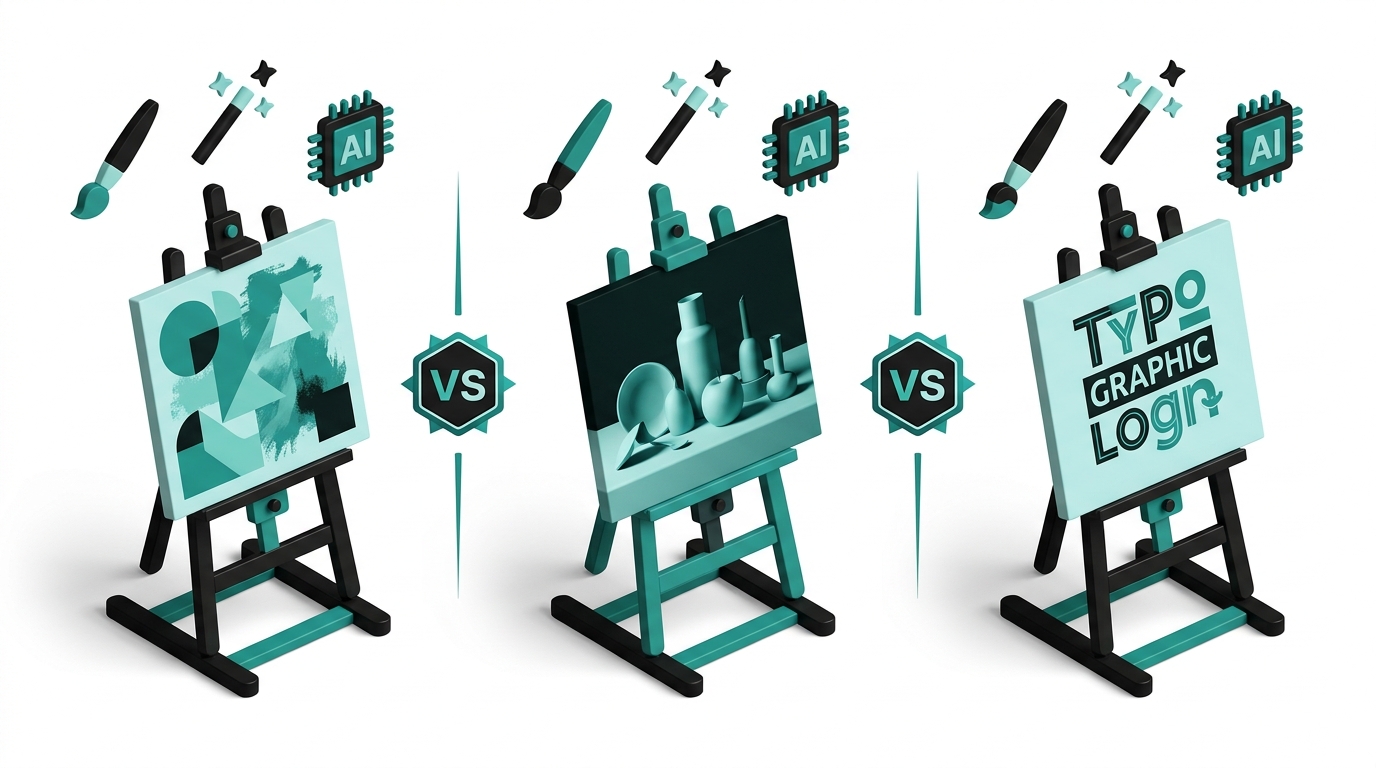
Key Takeaways
- Midjourney produces the most artistic, cinematic images and is the top choice for professional creative work and concept art.
- Ideogram 3.0 leads all rivals in text rendering accuracy, making it the clear winner for posters, logos, and any image requiring readable typography.
- DALL-E 3 integrates natively with ChatGPT Plus ($20/month) and offers the easiest conversational prompt-editing workflow, ideal for beginners.
- Midjourney pricing starts at $10/month (or $8/month billed annually), with no free tier currently available.
- Ideogram offers a free plan with 10 slow credits per week; paid plans begin at $8/month for the Basic tier.
- DALL-E 3 is accessible via ChatGPT Plus at $20/month, or via API at $0.04 per standard 1024×1024 image.
- Paid Midjourney subscribers own full commercial rights to generated images; businesses earning over $1 million annually must use the Pro or Mega plan for commercial use.
- Ideogram 3.0 introduced Style References and a library of over 4.3 billion style presets, giving it the strongest style-control system of the three.
- For prompt adherence and literal accuracy, DALL-E 3 outperforms Midjourney, which tends to interpret prompts more creatively than literally.
Choosing an AI image generator in 2025 is no longer a simple decision. Three platforms have pulled ahead of the crowd: Midjourney, DALL-E 3 from OpenAI, and the newer challenger Ideogram. Each has carved out a distinct niche, and the “best” option depends entirely on what you need to create.
Midjourney has long been the benchmark for artistic quality, consistently producing images that look like professional concept art or editorial photography. DALL-E 3 leans into accessibility and conversational editing, making it the go-to for users who want to iterate quickly through ChatGPT. Ideogram entered the scene focused on one thing the others couldn’t do well: rendering legible, stylish text inside images. It has since evolved into a full-featured creative platform.
This comparison breaks down all three tools on image quality, text rendering, prompt adherence, pricing, and commercial rights so you can pick the right platform for your workflow without wasting time or money.
Quick Comparison
| Feature | Midjourney | DALL-E 3 | Ideogram |
|---|---|---|---|
| Starting Price | $10/month | $20/month (ChatGPT Plus) | Free / $8/month Basic |
| Free Plan | No | Limited (Bing Image Creator) | Yes (10 credits/week) |
| Image Quality | Exceptional (artistic) | Very Good (realistic) | Good (improving) |
| Text Rendering | Weak | Moderate | Best-in-class |
| Prompt Adherence | Interpretive | Literal and accurate | High accuracy |
| Commercial Rights | Yes (paid plans) | Yes (full ownership) | Yes (paid plans) |
| API Access | Yes | Yes | Yes |
| Best For | Artists, concept creators | Beginners, writers | Text-heavy designs, posters |
What is Midjourney?
Midjourney is a text-to-image AI developed by the independent research lab of the same name. Launched publicly in 2022, it quickly became the gold standard for AI-generated artistic imagery. Unlike most competitors, Midjourney runs through Discord, though a web interface has been progressively rolled out to users.
The platform is renowned for producing richly detailed, cinematic images that feel hand-crafted rather than algorithmically generated. It excels at moody lighting, intricate textures, and a visual style that appeals strongly to concept artists, illustrators, game designers, and creative directors. Version 6 introduced meaningful improvements in coherence and text accuracy, though text rendering still lags behind Ideogram.
Midjourney offers four paid tiers: Basic ($10/month), Standard ($30/month), Pro ($60/month), and Mega ($120/month). Annual billing reduces each by 20%. There is currently no free trial. Higher plans unlock Relax Mode for unlimited slow generations and Stealth Mode for private image creation. Paid users own full commercial rights to their images, with an important caveat for companies grossing over $1 million per year: those businesses must be on the Pro or Mega plan to use images commercially.
For anyone focused on visual artistry and is willing to learn its prompt-crafting nuances, Midjourney remains the most capable tool for producing striking, professional-grade AI art.
What is DALL-E 3?
DALL-E 3 is OpenAI’s third-generation text-to-image model, integrated natively into ChatGPT and available via OpenAI’s API. It represents a significant leap over DALL-E 2 in both prompt understanding and image fidelity, and its tight integration with the ChatGPT interface makes it uniquely easy to use for conversational prompt iteration.
The biggest advantage DALL-E 3 holds over its rivals is prompt adherence. When you describe a complex scene, DALL-E 3 tends to follow the description more literally than Midjourney, which interprets prompts more creatively. This makes it particularly useful for content creators, bloggers, and marketers who need images that match a specific brief rather than an artistic interpretation of one.
Access comes through ChatGPT Plus at $20/month, which bundles image generation alongside other AI features. For developers and power users, the API charges per image: $0.04 per standard 1024×1024 image, $0.08 for HD quality at the same resolution, and up to $0.12 for HD at 1024×1792 resolution. Microsoft Bing Image Creator also offers free DALL-E 3 access with daily limits, making it a useful entry point for casual users.
OpenAI grants users full ownership of images created through DALL-E 3, and API data is not used for model training by default. The tool works well for blog illustrations, quick social content, and any scenario where accuracy to the prompt matters more than artistic interpretation.
What is Ideogram?
Ideogram is an AI image generator that launched in 2023 with a specific focus on text-in-image generation, a capability that had long been a frustrating weakness across the entire AI image space. Founded by former Google Brain researchers, Ideogram built its reputation on producing images where embedded text is legible, stylistically consistent, and accurately placed.
With Ideogram 3.0, the platform has expanded well beyond text. It now features Style References (allowing upload of up to three reference images to guide aesthetics), a Random Style generator with over 4.3 billion presets, and an infinite Canvas workspace for multi-image design projects. Magic Fill enables focused inpainting with higher pixel density than many competitors. These additions have transformed Ideogram from a text-rendering niche tool into a legitimate all-purpose creative platform.
Pricing is competitive. Ideogram offers a free plan with 10 slow-generation credits per week. The Basic plan is $8/month with roughly 1,600 images worth of priority credits. Plus runs $20/month for around 4,000 priority images, with unlimited slow generation and private image creation. The Pro plan at $60/month includes batch generation via CSV and approximately 14,000 priority credits per month.
Ideogram is the right choice whenever you need text inside your images, whether for social media graphics, event posters, product mockups, or branded content. Its style-control system also makes it a strong option for designers who need visual consistency across a project.
Feature-by-Feature Breakdown
Image Quality and Realism
Midjourney consistently produces the highest-quality artistic output of the three platforms. Its images carry a cinematic depth, rich texture, and compositional sophistication that makes them look like the output of a seasoned digital artist rather than an algorithm. Version 6 improved coherence significantly, and Version 7 (released in 2025) pushed realism further while maintaining the platform’s signature aesthetic quality. It remains the benchmark for AI art.
DALL-E 3 produces clean, detailed images that lean toward realism rather than artistry. The output looks accurate and polished, especially for everyday objects, people, and scenes, but lacks the dramatic flair that makes Midjourney images stand out. It performs reliably across a wide variety of subjects without requiring expert prompt crafting.
Ideogram 3.0 has closed the gap considerably with its earlier versions. Image quality is solid across most categories, with particular strength in poster-style and graphic design compositions. It does not yet match Midjourney for photorealistic portraits or cinematic scene-setting, but for structured, design-oriented visuals it is highly capable.
Text Rendering in Images
This is the most decisive differentiator across all three tools, and the rankings here are clear.
Ideogram is the undisputed leader. Built from the ground up to handle typography, it achieves text accuracy that community benchmarks and independent reviewers consistently rate at or near 90%. The platform handles longer text passages, multiple font styles (including handwritten, 3D, and graffiti variants), and maintains stylistic consistency between the text and surrounding image elements. For any project where the words in the image need to actually be readable and on-brand, Ideogram is the only serious choice.
DALL-E 3 falls in the middle. It handles short words and simple signage reasonably well, but longer phrases or stylized typography often produce errors, misspellings, or inconsistent letterforms. It is workable for simple text elements but unreliable for anything complex.
Midjourney is the weakest of the three for text rendering. Despite improvements in v6, it still struggles with anything beyond very short words or abstract lettering. Attempting to generate posters or logos with specific text in Midjourney typically requires post-processing to fix character errors. Community benchmarks rate its text accuracy around 25-30% for even short phrases.
Prompt Adherence
DALL-E 3 leads in prompt adherence. Its tight integration with ChatGPT’s language model means it interprets natural language instructions with a high degree of accuracy. When you describe a specific scene, arrangement, or set of elements, DALL-E 3 delivers an image that closely matches what you described. It also allows iterative editing through conversation, letting you refine images by describing changes rather than rewriting prompts from scratch.
Ideogram 3.0 also performs well on prompt accuracy. The style reference system and precise canvas tools give users strong control over the output. Prompt instructions for composition, color palette, and subject placement are followed reliably.
Midjourney is the most interpretive of the three. It tends to take creative liberties with prompts, producing images that capture the spirit or mood of the description rather than its literal content. This is often a feature for experienced users who appreciate the artistic interpretation, but it can be frustrating when you need a specific result quickly. Midjourney rewards users who invest time in learning its prompting language, including aspect ratio flags, style modifiers, and negative prompts.
Pricing
Ideogram offers the most accessible entry point. Its free plan provides 10 slow-generation credits per week, enough to test the platform thoroughly. The Basic plan at $8/month is the most affordable paid tier across the three tools, and the Plus plan at $20/month matches ChatGPT Plus pricing but includes more dedicated image generation capacity.
Midjourney requires a paid subscription from day one, with no free trial available as of 2025. The Basic plan at $10/month is a reasonable entry, but the Standard plan at $30/month is where most regular users land, as it includes Relax Mode for unlimited slow generations. Annual billing reduces all plans by 20%, bringing the Basic plan to $8/month effective cost.
DALL-E 3 through ChatGPT Plus at $20/month is cost-efficient if you already use ChatGPT for other tasks, since you get the full suite of ChatGPT features alongside image generation. If you only need images and nothing else, the per-image API pricing ($0.04-$0.12 depending on quality and resolution) can be more economical for low-volume use. Free access is available via Microsoft Bing Image Creator, though with daily generation limits.
Commercial Rights
All three platforms grant commercial usage rights to paying subscribers, but with different conditions.
Midjourney gives paid subscribers ownership of generated assets to the fullest extent possible under applicable law, with rights to use images commercially. The key exception is for high-revenue companies: businesses earning more than $1 million USD annually must subscribe to the Pro or Mega plan ($60 or $120/month) to exercise commercial rights. Free users are restricted to a Creative Commons non-commercial license.
OpenAI grants DALL-E 3 users full ownership of images they create, and API users are explicitly protected from having their data used for model training. There are no revenue-based thresholds or tier restrictions on commercial use. Any paying user can use images commercially.
Ideogram grants commercial rights on paid plans. The Plus plan ($20/month) includes private generation, which is important for commercial work where you do not want your images appearing in public galleries. Free plan generations are public by default, which may be a concern for commercial projects.
Who Should Use Which?
Choose Midjourney if: you are a creative professional, digital artist, concept designer, or photographer-adjacent creator who wants the most visually striking output available. Midjourney rewards those willing to invest in learning its prompt system, and the results consistently outshine competitors for gallery-quality artistic work. It is also the best choice for generating dramatic landscapes, character art, and cinematic scenes.
Choose DALL-E 3 if: you are a content creator, blogger, marketer, or writer who needs images that precisely match a description with minimal prompt-crafting effort. If you already subscribe to ChatGPT Plus for other AI tasks, DALL-E 3 is essentially bundled in at no extra cost. It is also ideal for anyone new to AI image generation who wants a gentle learning curve.
Choose Ideogram if: your work involves text inside images. Think social media graphics, event posters, branded content, product labels, or any design where typography is part of the visual. Ideogram’s free plan makes it easy to test without commitment, and its Style Reference system makes it the strongest option for maintaining visual consistency across a project. It also works well alongside other tools: use Midjourney for your background scenes, then Ideogram when you need to add reliable text.
Verdict
Midjourney is still the best AI image generator for pure artistic output. If visual impact and image quality are your primary metrics, nothing else matches it in 2025. The lack of a free trial is a genuine barrier, but paying subscribers get what they pay for.
Ideogram has arguably made the most impressive progress of any image AI in the past year. Its text rendering capability is in a category of its own, and the addition of Style References and Canvas in version 3.0 means it now competes seriously with Midjourney and DALL-E 3 across a much broader range of use cases. The free plan makes it a no-risk starting point.
DALL-E 3 sits in an important middle ground: more accessible than Midjourney, more polished than most free alternatives, and seamlessly integrated with the most widely used AI assistant in the world. For users who already live in the ChatGPT ecosystem, it remains the most practical and flexible choice.
If you can only pick one: creative professionals should choose Midjourney. Designers who need text in images should choose Ideogram. Everyone else should start with DALL-E 3 through ChatGPT Plus and branch out from there.
Frequently Asked Questions
Is Midjourney better than DALL-E 3?
For artistic image quality, yes. Midjourney consistently produces more visually striking output. But DALL-E 3 is better for prompt accuracy and ease of use. The right choice depends on your priorities: artistic impact versus precise, literal results.
Which AI image generator handles text in images best?
Ideogram is by a significant margin. Its text rendering accuracy is rated around 90% in community benchmarks, compared to approximately 25-30% for Midjourney and moderate accuracy for DALL-E 3 with short text only.
Can I use Midjourney images commercially?
Yes, paid Midjourney subscribers own commercial rights to their images. However, companies earning more than $1 million per year must subscribe to the Pro or Mega plan ($60 or $120/month) to use images commercially.
Does Ideogram have a free plan?
Yes. Ideogram’s free plan includes 10 slow-generation credits per week. Free images are public by default, so paid plans are recommended for commercial or private work.
How much does DALL-E 3 cost without a ChatGPT subscription?
Via the OpenAI API, DALL-E 3 charges $0.04 per standard 1024×1024 image, $0.08 for HD at the same resolution, and $0.12 for HD at 1024×1792 or 1792×1024. Free access is also available through Microsoft Bing Image Creator with daily usage limits.
Is Midjourney worth it for beginners?
Midjourney has a steeper learning curve than DALL-E 3 and requires Discord familiarity (or use of the newer web interface). There is no free trial. Beginners who want to explore AI image generation without commitment are better served starting with Ideogram’s free plan or DALL-E 3 via Bing Image Creator.
Which tool is best for social media graphics?
Ideogram is the strongest choice for social media graphics, particularly because it handles text overlays, branded typography, and style consistency better than competitors. Its Canvas workspace also makes it easy to create multiple coordinated assets in one session.
Does DALL-E 3 give commercial rights?
Yes. OpenAI grants users full ownership of images created with DALL-E 3. There are no revenue thresholds or tier restrictions on commercial use, and API data is not used for model training by default.
What is Ideogram 3.0’s most important new feature?
Style References is the standout addition in Ideogram 3.0. It allows users to upload up to three reference images to guide the visual style of generated output, paired with a library of over 4.3 billion style presets and savable Style Codes for consistent branding across multiple images.
All three platforms (Midjourney, DALL-E 3, and Ideogram) are capable tools that have pushed AI image generation further than most predicted possible just a few years ago. The key is matching the tool to the task. For the most artistic output, Midjourney wins. For text in images, Ideogram is unmatched. For ease, accessibility, and tight integration with a broader AI workflow, DALL-E 3 makes the most practical sense. Many serious creators end up subscribing to two or even all three, using each where it excels. Start with whichever aligns with your most immediate need, test it against real projects, and expand from there as your workflow demands it.
If you want to explore more AI tools for creative work, check out our Canva AI comparison for social media design tools, or our Runway Gen-4 review if you are ready to move from images into AI video.