Key Takeaways
- Gemini integrates natively with Google Workspace (Gmail, Docs, Sheets, Drive, Meet) while ChatGPT requires separate workarounds and third-party integrations.
- Gemini has a 1 million token context window versus ChatGPT’s 128K, allowing it to process entire books and codebases in a single request.
- ChatGPT excels at creative writing, storytelling, and human-like conversation while Gemini is better for research, fact-checking, and data analysis.
- Gemini Advanced costs $20/month, and Google Workspace users get Gemini access included with their subscription as of January 2025.
- ChatGPT Plus costs $20/month while ChatGPT Team is $25/month per user (minimum 2 users) and ChatGPT Pro is $200/month.
- For complex formula logic and multi-step spreadsheet analysis, ChatGPT through third-party add-ons is more reliable than Gemini.
- Gemini’s knowledge cutoff is January 2025 while ChatGPT’s is June 2024, giving Gemini an edge for recent events and current information.
- Many teams use both tools together: ChatGPT for creative tasks and Gemini for research-heavy, fact-based, and Workspace-native workflows.
Google Workspace has become the default productivity suite for thousands of organizations worldwide. Gmail, Google Docs, Google Sheets, Google Drive, Google Meet, and Google Slides handle everything from communication to complex data analysis. When a new AI tool arrives, the first question teams ask is simple: does it work with what we already use?
That question has two answers now. Google’s Gemini is built into Workspace. OpenAI’s ChatGPT is not. This fundamental difference shapes how each tool fits into your daily work, and understanding which matters more to you is the key to making the right choice.
This comparison focuses on what matters most to Google Workspace teams: integration depth, pricing, real-world performance on your existing tools, and practical considerations for scaling across a business. Both tools are powerful. Both are actively improving. The choice comes down to where you work and what you need them to do.
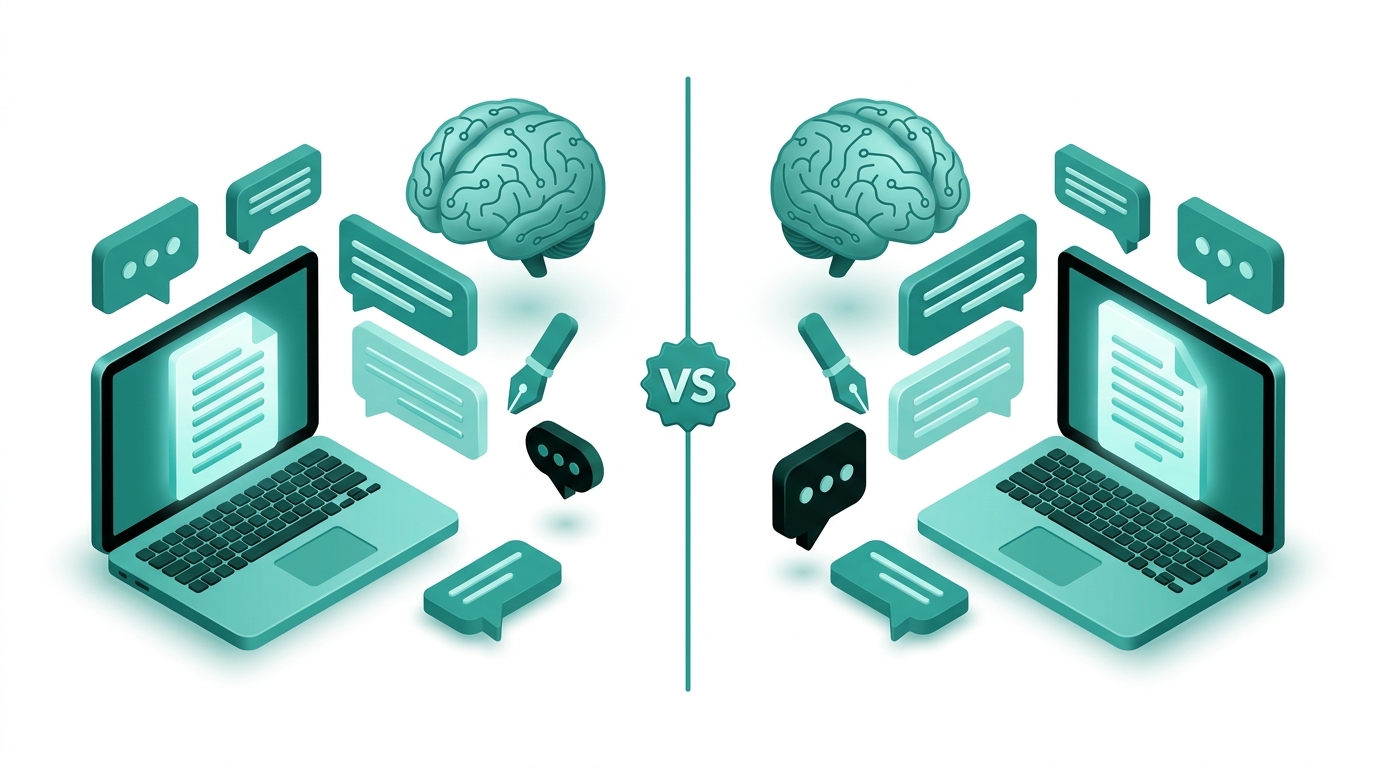
Quick Comparison: Gemini vs ChatGPT
| Feature | Google Gemini | ChatGPT |
|---|---|---|
| Base Model | Gemini 2.0 Flash / 2.0 Pro / 1.5 Pro | GPT-4o / GPT-5 (via Plus/Pro) |
| Context Window | 1 million tokens | 128,000 tokens |
| Individual Pricing | $20/month (Advanced) | $20/month (Plus) |
| Team/Business Pricing | Included in Google Workspace ($8 to $30/user/month) | $25/month per user (Team, min 2 users); $200/month (Pro) |
| Free Tier | Yes (Gemini) | Yes (ChatGPT) |
| Gmail Integration | Native (built-in) | No (requires third-party add-ons) |
| Google Docs Integration | Native (built-in) | No (requires third-party add-ons) |
| Google Sheets Integration | Native (help with formulas) | More reliable for complex analysis (via GPT for Sheets) |
| Google Drive Integration | Yes (native) | No |
| Google Meet Support | Yes (native) | No |
| Knowledge Cutoff | January 2025 | June 2024 |
| Real-Time Search | Yes (Google Search integration) | Limited (browsing available) |
| Creative Writing | Good | Excellent |
| Code Generation | Strong | Strong |
| Multimodal (text, image, video, audio) | Yes | Yes (text and images) |
What is Google Gemini?
Google Gemini is Google’s family of large language models designed to work across the entire Google ecosystem. Gemini comes in multiple versions: Gemini 2.0 Flash (fast, low-latency responses), Gemini 2.0 Pro (most capable), and Gemini 1.5 Pro (strong performer for complex tasks). The key models most users interact with are Gemini 2.0 Flash for everyday speed and Gemini 2.0 Pro for heavier workloads.
What makes Gemini different from a blank ChatGPT window is the context it has access to. When you use Gemini in Gmail, it sees your email thread. When you use it in Google Docs, it sees your document. When you use it in Google Sheets, it understands your data. This native integration means Gemini can reference your actual work without you copying and pasting information across applications. It can draft emails that mention meetings from your calendar. It can suggest formulas based on the data structure in your sheet. It can summarize lengthy email threads without you having to manually paste them.
Gemini Advanced is Google’s consumer subscription, priced at $20/month. For Google Workspace users, the bigger story happened in January 2025 when Google included Gemini access in all Workspace subscriptions at no extra cost to those willing to accept a price increase on their plans. Organizations using Workspace now have Gemini available to their teams without purchasing separate AI subscriptions. This bundling makes Gemini appealing for companies already invested in Google Workspace.
The model’s context window is enormous: 1 million tokens. That means you can upload entire codebases, books, or years of transcripts, and Gemini will process them as a single request. ChatGPT’s 128K context window is useful but significantly smaller. For analysis work that requires holding large amounts of information in memory, this difference matters.
What is ChatGPT?
ChatGPT is OpenAI’s conversational AI, available through the ChatGPT website, mobile app, and various integrations. The most common versions are ChatGPT Plus (powered by GPT-4o with 128K context) and ChatGPT Pro (powered by GPT-5 at $200/month for users who want maximum capability and think-time for complex problems).
ChatGPT is not integrated into Google Workspace. There are no native buttons in Gmail, Docs, or Sheets that send information directly to ChatGPT. Instead, you either visit ChatGPT in a separate browser tab or use third-party add-ons like GPT for Sheets or ChatGPT integrations that require manual setup. This fragmentation is ChatGPT’s weakness for Workspace users, but it’s also not a fatal one because the standalone ChatGPT application is accessible from anywhere and works well for many tasks.
ChatGPT’s reputation is built on two things: its natural conversation ability and its reliability at creative work. People describe ChatGPT as “more human-like” in its responses. It excels at writing essays, generating storylines, brainstorming campaigns, and producing content that needs warmth and personality. For team communications, marketing copy, and creative projects, ChatGPT tends to be the preferred choice.
The pricing structure for teams is as follows: ChatGPT Plus at $20/month for individuals, ChatGPT Team at $25 per user per month with a minimum of 2 users (so $50/month minimum), and ChatGPT Pro at $200/month for power users. None of these is bundled with Workspace subscriptions.
Gemini vs ChatGPT: Google Workspace Integration
Gmail Integration
In Gmail, Gemini appears as a native feature alongside the standard reply options. You can ask Gemini to help you write, and it suggests replies based on the conversation thread. The “Help me write” feature uses context from the entire email conversation, so Gemini understands what’s being discussed and drafts replies that fit the tone. Gemini can also summarize long email threads, extract action items, and even check your calendar when drafting a response (so it can reference meetings without you copying the information manually).
ChatGPT has no native Gmail integration. You can copy an email’s text and paste it into ChatGPT in a separate tab, but that workflow is manual and breaks the continuity of your work. Some third-party integrations exist, but they require setup and often cost extra money.
Google Docs and Drive
In Google Docs, Gemini can draft content from your prompt, rewrite selected text in different tones, summarize documents, and generate structured outlines. The tool understands your document’s context and can reference previous sections when making suggestions. It can also access files in Google Drive, so Gemini can pull information from multiple documents when you ask.
ChatGPT cannot access Google Drive or edit Google Docs directly. You’d need to copy and paste content between Docs and the ChatGPT window, which is cumbersome for large or complex documents.
Google Sheets
Gemini in Sheets can generate formulas from plain English descriptions. If you describe what you want (“sum all values in column B where column A is greater than 10”), Gemini will write the formula. It can also explain what existing formulas do and help build basic analysis pipelines.
However, Gemini has a limitation for complex spreadsheet work. Third-party tools like GPT for Sheets actually perform better than Gemini when handling multi-step analysis or intricate formula logic. If your team runs complex spreadsheets with nested formulas and data dependencies, ChatGPT through GPT for Sheets may be more reliable.
Google Meet and Slides
Gemini integrates with Google Meet to summarize meetings and capture action items. After a meeting ends, Gemini can generate a summary of key points and decisions. For Google Slides, Gemini can help generate presentation content and suggest design improvements.
ChatGPT has no native integration with either tool.
Gemini vs ChatGPT: AI Capabilities
Writing and Text Generation
ChatGPT is widely considered the stronger choice for creative writing, marketing copy, and content that requires personality. Users consistently report that ChatGPT produces more engaging storytelling and more natural dialog. The writing feels less stiff and more attuned to human preferences.
Gemini produces solid writing but tends to be more structured and formal. If you’re drafting a business email or a technical document, both are fine. If you’re writing a campaign narrative or a blog post that needs to captivate readers, ChatGPT usually wins.
Data Analysis
Gemini’s 1 million token context window gives it a major advantage for data analysis. You can upload CSV files, large datasets, and entire spreadsheets, and Gemini will analyze them in a single request. ChatGPT’s 128K limit means you need to break large datasets into chunks or summarize data before uploading.
For structured, fact-based analysis (extracting patterns, summarizing trends, finding outliers), both tools perform well. Gemini has the edge for scale.
Image Understanding
Both Gemini and ChatGPT can analyze images. Gemini can also process video, which gives it an advantage for tasks like analyzing screen recordings or instructional videos. ChatGPT’s image understanding is strong but limited to static images.
Search and Real-Time Information
Gemini has built-in access to Google Search, so it can provide current information and cite sources directly from the web. ChatGPT has knowledge only up to June 2024, making it less useful for research on recent events. You can enable web browsing in ChatGPT, but it’s not as seamlessly integrated as Gemini’s search feature.
Gemini vs ChatGPT: Pricing for Teams
For a single user, the cost is identical: $20/month for either Gemini Advanced or ChatGPT Plus. The pricing difference emerges at scale.
Google Workspace subscriptions start at around $8 per user per month for the Business Starter plan and go up to $30 per user per month for the Business Standard plan. Starting January 2025, Gemini access is included in these plans as part of a price increase Google implemented. Organizations that already subscribe to Workspace get Gemini for their teams without additional per-user costs beyond what they’re paying for email and docs.
ChatGPT Teams costs $25 per user per month with a 2-user minimum, meaning the baseline cost is $50/month for a small team. ChatGPT Pro is $200/month for a single user. For organizations with 10 or more people, ChatGPT’s team pricing can be significantly more expensive than Workspace’s bundled approach.
However, price alone doesn’t determine total cost. If your team uses ChatGPT more effectively for specific tasks (like creative campaigns), the cost might be justified. The calculation is: cost per user, frequency of use, and value generated from that use.
Who Should Use Gemini vs ChatGPT?
Use Gemini if your team lives in Google Workspace. If you use Gmail daily, draft documents in Docs, analyze data in Sheets, and attend meetings in Meet, Gemini’s integration will save time and context-switching. You won’t need to copy and paste information between applications. Gemini’s native access to your work means faster answers and fewer steps.
Gemini is also better for teams that need to process large files or datasets. The million-token context window means you can upload entire codebases, financial reports, or research databases without chunking the data.
Use ChatGPT if your work involves creative writing, marketing, content production, or any task requiring a warm, engaging tone. ChatGPT’s strength is personality and natural language output. If you’re writing customer-facing content, ChatGPT typically produces better results.
Use ChatGPT if your spreadsheet work is complex and formula-heavy. While Gemini is improving, ChatGPT through third-party sheets integration still handles intricate analysis more reliably.
Use both if you can. The best teams in 2025 use Gemini for research, fact-checking, and Workspace-native tasks, while using ChatGPT for creative and strategic work. The cost of both tools combined is still reasonable compared to hiring a human researcher or marketing specialist.
Verdict: Which is Better for Google Workspace Users?
For a Google Workspace organization, Gemini is the practical choice because it’s already built in, requires no additional per-user cost above your Workspace subscription, and eliminates the friction of copying information between applications. A team of 20 people on Workspace already has Gemini. Adding ChatGPT would cost an extra $500 per month.
That said, Gemini is not universally better than ChatGPT. It’s better integrated. For specific tasks, ChatGPT performs better. The ideal approach for resource-constrained teams is to start with Gemini since it’s already included, then add ChatGPT if you find yourself needing ChatGPT’s strengths (creative writing, marketing, complex formula analysis).
The practical reality that teams are discovering in 2025 is this: you don’t need to choose. Use Gemini for research, Gmail drafts, document summaries, and spreadsheet help. Use ChatGPT for campaigns, proposals, and creative work. The combination costs less than hiring an additional team member and covers a broader range of capabilities than either tool alone.
Frequently Asked Questions
Is Gemini included in Google Workspace?
Yes. Starting January 15, 2025, Google included Gemini in all Google Workspace subscriptions. However, Google raised Workspace prices by 15-20% to cover the cost. This means Gemini is technically “included” but your monthly bill is higher than before.
Can I use ChatGPT directly in Gmail or Google Docs?
No. ChatGPT has no native integration with Google Workspace applications. You can use third-party add-ons, but they require manual setup and separate subscriptions. The experience is not seamless.
Which AI is better for customer support?
Gemini has an edge because it can access email threads directly and draft responses that reference context from the conversation. ChatGPT requires copying emails into a separate application. However, ChatGPT’s responses are often more personable and warm, which matters in customer communication. Consider your priorities: speed and integration (Gemini) or tone and warmth (ChatGPT).
Can Gemini process entire files like ChatGPT?
Yes, and better. Gemini’s 1 million token context window is far larger than ChatGPT’s 128K, so Gemini can handle larger files and datasets in a single request without chunking or splitting the data.
Which AI has the most current information?
Gemini’s knowledge cutoff is January 2025, while ChatGPT’s is June 2024. Gemini also has built-in Google Search integration, so it can find current information from the web. For recent events and up-to-date research, Gemini is stronger.
What if we’re not using Google Workspace?
If you use Microsoft 365 (Outlook, Teams, OneDrive, Excel), ChatGPT is a better fit because OpenAI has integrations with Microsoft products. If you use neither Google Workspace nor Microsoft 365, both Gemini and ChatGPT work equally well as standalone applications.
Can I switch between Gemini and ChatGPT for different tasks?
Yes, absolutely. Many organizations do this. Use Gemini for research-heavy, fact-based, and Workspace-native tasks. Use ChatGPT for creative work, marketing content, and strategic writing. The two tools complement each other well.
Both Gemini and ChatGPT are powerful tools that will continue to improve. The question isn’t which is universally better. The question is which fits your work, your budget, and your existing toolset. For Google Workspace users, Gemini’s integration and bundled pricing make it the starting point. ChatGPT’s strengths in creative work and specific analytical tasks make it a valuable addition for teams that can afford it.
The future of productivity is not choosing between these tools but knowing when to use each one. Start with Gemini since it’s already in your Workspace. Expand to ChatGPT if you find specific tasks where it performs better. Measure the value generated from each tool and adjust your approach over time. That’s the professional approach in 2025.