Key Takeaways
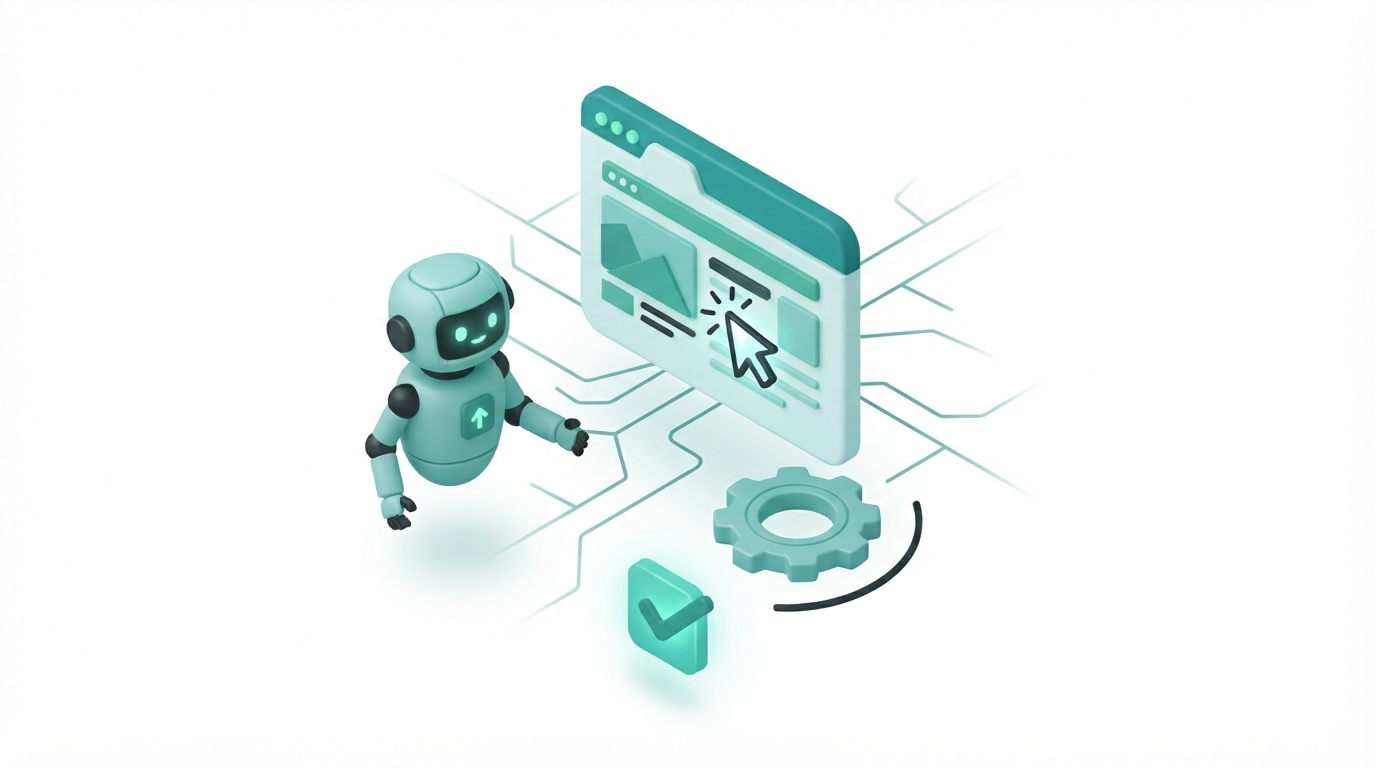
- AI browser agents are software systems that control a real web browser autonomously: navigating pages, clicking buttons, filling forms, comparing information across sites, and completing multi-step tasks based on plain language instructions. They differ from AI search tools in that they do not just retrieve information, they take actions in the browser the same way a person would.
- Perplexity Comet is the strongest option for individual users who want AI-assisted browsing without technical setup. It is a full Chromium-based browser with Perplexity’s AI built in, available on iOS, Android, macOS, Windows, and iPad. The Comet Assistant can navigate sites, fill forms, compare products, and synthesize research across multiple pages. The base browser is free; Perplexity Pro at $20 per month adds 200 Pro Searches and 20 Deep Research queries per week.
- Browser Use is the leading open-source AI browser agent framework, achieving an 89.1% success rate on the WebVoyager benchmark across 586 diverse web tasks. It works with any LLM (Claude, GPT-4, Gemini, local models), is free under MIT license, and parses page DOM structure rather than relying on screenshots, making it more reliable and efficient than vision-only approaches. Users pay only for the AI model API they connect it to.
- ChatGPT Operator (marketed as Atlas in enterprise contexts) is OpenAI’s browser agent for booking, purchasing, and form completion. As of mid-2026 it runs on macOS only and requires a ChatGPT Plus or Pro subscription. It handles real-world transactions including flight booking on Google Flights and checkout processes.
- Skyvern is the strongest no-code browser automation tool for form-heavy workflows, using computer vision plus LLM reasoning to handle form fields without needing CSS selectors or DOM knowledge. It scores 85.85% on WebVoyager and is particularly capable on government, insurance, and procurement forms that frequently change structure.
- Claude Computer Use (Anthropic) is the only agent in this category that can drive an entire desktop environment, delivering not just a web browser. It uses a screenshot plus keyboard and mouse approach that works across virtual machines, containers, and remote desktops. Browser-only benchmarks show it trailing Browser Use and Operator, but no other agent matches its desktop scope.
- The core limitation across all AI browser agents in 2026 is handling CAPTCHAs, two-factor authentication, dynamic rendering, and bot-detection systems that websites use to block automated access. Each platform addresses these differently: Bright Data’s Agent Browser is the most robust enterprise solution for bypassing bot detection; Browser Use handles most standard dynamic pages; Operator and Comet are optimized for mainstream consumer sites that expect normal browser traffic.
- AI browser agents that can take real actions (purchasing, form submission, account management) require careful trust evaluation. An agent that can fill and submit forms can also submit incorrect information. Setting agent permissions conservatively, reviewing actions before confirmation where possible, and using agents on low-stakes tasks before high-stakes ones is the practical approach to integrating these tools safely.
The step from AI that answers questions to AI that takes actions in a browser is larger than it appears. An AI that retrieves information is useful. An AI that can navigate to a website, log in, fill out a form, compare prices across three different pages, and come back with a finished result has replaced an hour of manual work. That capability is what browser agents deliver, and it has matured significantly in 2026.
This guide covers the best AI browser agents available in 2026, organized by use case: consumer browsing assistance, developer and automation workflows, enterprise-scale web automation, and no-code business process automation. The tools differ significantly in how they work technically, what tasks they handle best, and what they cost.
Best AI Browser Agents in 2026
1. Perplexity Comet: Best Consumer AI Browser
Perplexity Comet is a full Chromium-based browser with Perplexity’s AI search and agent capabilities built in at the system level rather than added as an extension. Launched in July 2025 and expanded to all major platforms by mid-2026, Comet is available on iOS, Android, macOS, Windows, and iPad, making it the most accessible AI browser agent for individual users who do not want to configure APIs or write prompts.
The Comet Assistant integrates Perplexity’s cited, source-linked search output with the ability to take action in the browser. Ask it to compare laptop prices across five retailers, find the cheapest flight on Google Flights for a given route, or fill in a contact form on a site you specify, and it navigates, reads pages, and either presents results or executes the action. Results include citations linking to the specific pages the assistant used, maintaining the source transparency that Perplexity is known for in its search product.
Cross-tab context is a practical differentiator: Comet maintains awareness of what is open across your browser tabs, allowing the assistant to synthesize information from multiple open sources without you manually copying content between them. For research tasks that involve gathering information from several sources simultaneously, this context window across tabs produces more coherent outputs than single-page AI tools.
Comet also handles email and calendar management when integrated with connected accounts, and can complete basic transactions on mainstream consumer sites. It is not built for complex programmatic automation; it is built for the everyday browsing tasks that consume disproportionate time: research, comparison shopping, form filling, and information gathering across multiple sites.
Pricing: The Comet browser is free to download and use. Perplexity Pro at $20 per month provides approximately 200 Pro Searches per week and 20 Deep Research queries per month, unlocking the higher-capability model tiers behind the assistant.
Best for: Individual users who want AI browsing assistance integrated into their daily browser without developer setup, and researchers who need cited synthesis across multiple web sources.
2. Browser Use: Best Open-Source AI Browser Agent
Browser Use is an open-source Python framework that connects any AI model to a real web browser, enabling the model to navigate pages, click elements, fill forms, extract data, and complete multi-step web tasks based on natural language instructions. It earned the highest benchmark score among open-source agents in 2026, with an 89.1% success rate on the WebVoyager benchmark across 586 diverse web tasks, outperforming OpenAI’s paid Operator product on that benchmark.
The technical approach is what distinguishes Browser Use from vision-only agents: rather than taking screenshots and asking the AI to identify where to click, Browser Use parses the actual DOM structure of each page and feeds the AI a clean representation of interactive elements (buttons, links, text inputs, dropdowns) with their attributes and positions. This approach is faster, more reliable across different screen resolutions, and less likely to misidentify elements than screenshot-based methods. It handles dynamically rendered pages, single-page applications, and complex multi-step workflows that confuse simpler automation tools.
Model flexibility is a significant practical advantage. Browser Use works with Claude 3.5 and 3.7 Sonnet, GPT-4o, Gemini 1.5 Pro, and local models including Llama variants. Developers can swap models based on task requirements, cost constraints, or performance benchmarks without rewriting their automation code. For teams running Browser Use at scale: the ability to route tasks to cheaper models for simple navigation and more capable models for complex reasoning reduces per-task API costs substantially.
The library is free under the MIT license and actively maintained on GitHub with 12,000+ stars as of mid-2026. Users pay only for the API calls made to whatever AI model they connect. For developers building custom web automation into their products, Browser Use is the strongest open-source foundation available.
Pricing: Free (MIT license). API costs for the connected LLM apply separately based on model and usage volume.
Best for: Developers and technical teams who want to build custom web automation workflows, integrate browser agent capabilities into their own products, or run high-volume automation where model flexibility and cost control matter.
3. ChatGPT Operator (Atlas): Best for Consumer Transaction Automation
ChatGPT Operator is OpenAI’s browser agent product, marketed as Atlas in enterprise contexts, designed to handle the category of web tasks that involve taking real actions: booking flights on Google Flights, completing e-commerce purchases, managing account settings on consumer platforms, and submitting forms across sites that implement standard web patterns. It operates by controlling a real browser session, navigating pages, and interacting with interface elements as a human user would.
Operator’s primary advantage is its integration with OpenAI’s leading models and its optimized performance on mainstream consumer sites. Unlike developer-focused tools that require prompt engineering and configuration, Operator is designed to accept conversational task descriptions (“book the cheapest round-trip flight from New York to Chicago in the first week of August”) and handle the multi-step browser interaction required to complete it without further instruction.
The tool handles two-factor authentication prompts by pausing and requesting user confirmation rather than attempting to bypass them, and it flags actions that require irreversible decisions (final purchase confirmation, form submission) for human review before executing. This cautious approach reduces the risk of automated errors on high-stakes actions.
As of mid-2026, Operator runs on macOS only, with no confirmed release date for Windows or mobile platforms. This platform limitation is the primary constraint for users outside the macOS ecosystem. Access requires a ChatGPT Plus subscription at $20 per month or a ChatGPT Pro subscription at $200 per month, which adds Operator access alongside the full ChatGPT product suite.
Pricing: Included with ChatGPT Plus ($20/month) or Pro ($200/month). MacOS only as of mid-2026.
Best for: Mac users who want to automate transaction-oriented web tasks like travel booking, online purchasing, and account management using natural language instructions integrated with their existing ChatGPT subscription.
4. Skyvern: Best No-Code Browser Automation for Forms and Workflows
Skyvern is a browser automation platform that uses computer vision plus LLM reasoning to complete web tasks without requiring knowledge of CSS selectors, DOM structure, or programming. It achieves an 85.85% success rate on the WebVoyager benchmark and is particularly capable on the category of web tasks that most other automation tools handle poorly: government forms, insurance applications, procurement portals, and regulatory submission workflows where form structure changes frequently and where scraping-based tools break every time the UI updates.
The computer vision approach is what makes Skyvern resilient to UI changes. Traditional web automation scripts break when a website updates its button labels, moves form fields, or changes CSS class names. Skyvern reads each page visually and uses LLM reasoning to understand what fields mean and what actions are needed, independent of the underlying code structure. A form that changes its field labels from “Company Name” to “Organization” does not require Skyvern to be reconfigured; it understands both.
The no-code visual workflow builder lets non-technical users configure automation sequences through a drag-and-drop interface. Define the starting URL, the goal of the task, and any inputs or credentials needed, and Skyvern handles the navigation and form interaction. This makes it accessible to operations and compliance teams who need to automate regulatory filings, insurance applications, or procurement processes without developer involvement.
Skyvern integrates with Zapier and Make for workflow chaining, allowing browser automation tasks to trigger downstream actions in other business tools. API access is available for developers who want to incorporate Skyvern’s form automation capabilities into their own systems.
Pricing: A free tier is available for evaluation. Paid plans are usage-based, scaling with the number of automation runs. Enterprise pricing is available for high-volume deployments.
Best for: Operations, compliance, and procurement teams who need to automate high-volume form submissions and regulatory workflows without writing code, and businesses whose automation targets frequently-changing web interfaces that break traditional scraping tools.
5. Claude Computer Use: Best for Full Desktop Automation
Claude Computer Use is Anthropic’s computer control API that enables Claude to operate a full desktop environment, delivering not just a web browser. It uses a screenshot plus keyboard and mouse control approach: Claude sees the current state of the screen via screenshot, decides what action to take, executes it through simulated keyboard and mouse input, and repeats. This approach works across virtual machines, Docker containers, cloud desktops, and any environment where a screen can be captured and input can be simulated.
The scope distinction is the primary differentiator from other browser agents. Where Operator, Comet, and Browser Use are optimized for web browser tasks, Claude Computer Use can interact with any application visible on screen: file management applications, desktop software, custom internal tools, command-line interfaces, and combinations of browser and non-browser applications in sequence. For automation tasks that involve moving between a browser and a desktop application (pulling data from a website into a local spreadsheet, for example), Claude Computer Use handles the full workflow without hand-offs.
On browser-only benchmarks, Claude Computer Use trails Browser Use and Operator due to the overhead of screenshot-based element identification versus DOM parsing. Its advantage lies in scope rather than browser speed: tasks that require interacting with the full computer environment rather than just web pages.
The API requires technical implementation. Developers access it through the Anthropic API using Claude 3.5 or 3.7 Sonnet with computer use tools enabled. There is no consumer interface; it is a developer capability that teams build into their own workflows or products.
Pricing: API usage billed per token through Anthropic’s standard pricing. Claude 3.5 Sonnet is the typical model choice for computer use tasks, balancing capability and cost.
Best for: Development teams building automation that spans browser and desktop applications, enterprises running complex workflows on cloud or virtual machine environments, and any automation task that requires controlling the full computer environment rather than just a web browser.
6. Bright Data Agent Browser: Best for Enterprise Web Data Collection
Bright Data’s Agent Browser is an enterprise-grade browser infrastructure built specifically for AI agents that need to scrape, research, or interact with websites at scale while handling the bot-detection and access-restriction systems that most websites deploy. It provides real browser environments with residential IP rotation, CAPTCHA solving, JavaScript rendering, and anti-bot fingerprint management, all through an API that AI agents connect to for their browsing sessions.
The problem it solves is the access layer: AI browser agents built on standard browser automation frequently get blocked by CAPTCHAs, IP bans, browser fingerprinting, and dynamic challenge systems that websites use to prevent automated access. Bright Data’s infrastructure handles these challenges automatically, providing agents with browser sessions that appear as legitimate residential user traffic rather than datacenter automation.
For enterprises running AI agents that need to research competitor pricing across hundreds of sites, monitor public data sources continuously, or gather market intelligence at scale, Bright Data’s infrastructure makes this possible at volumes that consumer browsers and standard automation frameworks cannot sustain. It covers global IP coverage across residential, mobile, and datacenter proxy types, with session management that maintains consistent browser identity across multi-step tasks on the same site.
Pricing: Enterprise pricing based on data volume and usage. A free trial is available. Not priced for individual or low-volume use; positioned for teams with significant ongoing web data requirements.
Best for: Enterprise teams running AI agents for large-scale competitive intelligence, market research, price monitoring, or any use case requiring reliable browser agent access to sites with strong bot-detection infrastructure.
How AI Browser Agents Compare
| Tool | Best For | Technical Setup | Price | Benchmark |
|---|---|---|---|---|
| Perplexity Comet | Consumer browsing and research | None (download browser) | Free / $20/month Pro | Not published |
| Browser Use | Developer automation | Python, API key | Free + LLM API costs | 89.1% WebVoyager |
| ChatGPT Operator | Transaction automation (Mac) | None (macOS app) | $20-200/month (Plus/Pro) | Not published |
| Skyvern | No-code form automation | No-code UI or API | Free tier + usage-based | 85.85% WebVoyager |
| Claude Computer Use | Full desktop automation | Developer API | Per-token API pricing | Trails browser-only agents |
| Bright Data Agent Browser | Enterprise data at scale | Developer API | Enterprise pricing | Not published |
What to Consider When Choosing an AI Browser Agent
The first decision is whether you need a consumer-ready tool or a developer framework. Perplexity Comet and ChatGPT Operator require no technical setup and handle the most common individual use cases (research, comparison, booking, form filling) through a conversational interface. Browser Use, Claude Computer Use, and Bright Data Agent Browser require technical implementation and are better suited for teams building automation into their products or workflows.
The second consideration is what types of sites and tasks the agent needs to handle. Mainstream consumer sites (Google, Amazon, booking platforms, government portals) are handled reliably by Operator and Comet. Complex or frequently-changing form interfaces are handled best by Skyvern. Sites with active bot detection at enterprise scale require Bright Data’s infrastructure. Full desktop workflows beyond the browser require Claude Computer Use.
The third consideration is the trust and safety model. AI browser agents that can take actions introduce risk. An agent given access to a purchasing account can make purchases. An agent filling forms can submit incorrect information. Agents that require confirmation before irreversible actions (Operator’s approach) reduce this risk for individual users. For business automation, logging all agent actions and building human review steps before high-stakes submissions is the appropriate safeguard.
Frequently Asked Questions
What is an AI browser agent?
An AI browser agent is a software system that controls a real web browser autonomously, navigating pages, clicking links and buttons, filling forms, and completing multi-step tasks based on plain language instructions. Unlike AI search tools that retrieve information from indexed content, browser agents take active steps in the browser: they visit sites, interact with page elements, and can complete tasks that require sequences of actions across multiple pages and websites.
What is the best AI browser agent in 2026?
The best AI browser agent depends on the use case. For individual users who want AI browsing without technical setup, Perplexity Comet is the strongest free option. For developers building custom automation, Browser Use leads on benchmarks with an 89.1% WebVoyager score and works with any LLM. For Mac users who want transaction automation through ChatGPT, Operator is the most polished consumer agent. For no-code business form automation, Skyvern is the strongest option. For enterprise-scale web data collection, Bright Data Agent Browser handles the access layer that standard agents cannot.
Is Browser Use free?
Yes. Browser Use is open-source under the MIT license and free to use. The only costs are the API fees for whatever AI model you connect it to (Claude, GPT-4, Gemini, or others). For teams running high-volume automation, choosing cheaper models for simple tasks and more capable models for complex reasoning controls API costs. The framework itself has no licensing fee.
How does Perplexity Comet work?
Perplexity Comet is a full Chromium-based browser with Perplexity’s AI assistant built in at the system level. The Comet Assistant can read pages across multiple open tabs, navigate to sites based on natural language instructions, fill forms, compare information across multiple sources, and present cited results linking to the specific pages it used. It is available on iOS, Android, macOS, Windows, and iPad. The base browser is free; Perplexity Pro at $20 per month unlocks higher-capability model tiers behind the assistant.
What is the difference between Browser Use and ChatGPT Operator?
Browser Use is an open-source developer framework that works with any AI model and requires Python setup and API configuration. It leads on the WebVoyager benchmark with 89.1% success and is designed for building custom automation. ChatGPT Operator is a consumer product from OpenAI requiring no technical setup, integrated into the ChatGPT interface on macOS. Operator is optimized for transactional tasks (booking, purchasing) on mainstream consumer sites and includes a human confirmation step before irreversible actions. Browser Use is more flexible and higher-performing on benchmark tests; Operator is easier to use for non-technical users on the Mac platform.
Can AI browser agents handle CAPTCHAs?
Most consumer AI browser agents (Comet, Operator) handle mainstream consumer sites that do not deploy aggressive CAPTCHA systems. Sites designed for normal human traffic generally do not trigger CAPTCHA challenges for agents that use real browser environments with standard browser fingerprints. For sites with aggressive bot detection, CAPTCHA requirements, or IP-based blocking, enterprise infrastructure like Bright Data Agent Browser is designed to handle these access challenges at scale. Browser Use and Skyvern handle most standard dynamic pages but may encounter bot-detection blocks on sites with aggressive security.
What can AI browser agents not do?
AI browser agents in 2026 struggle with several categories of tasks: sites that require two-factor authentication (most pause and require human confirmation), tasks requiring real-time judgment about whether an action has irreversible consequences, complex visual tasks on pages where the agent must understand image content rather than text, tasks requiring account credentials for services not configured in advance, and any interaction where the website’s bot detection successfully identifies and blocks the automated session. They also cannot take responsibility for errors they make: an agent that submits incorrect information on a form has done so, and unwinding that action is a human problem.