Key Takeaways
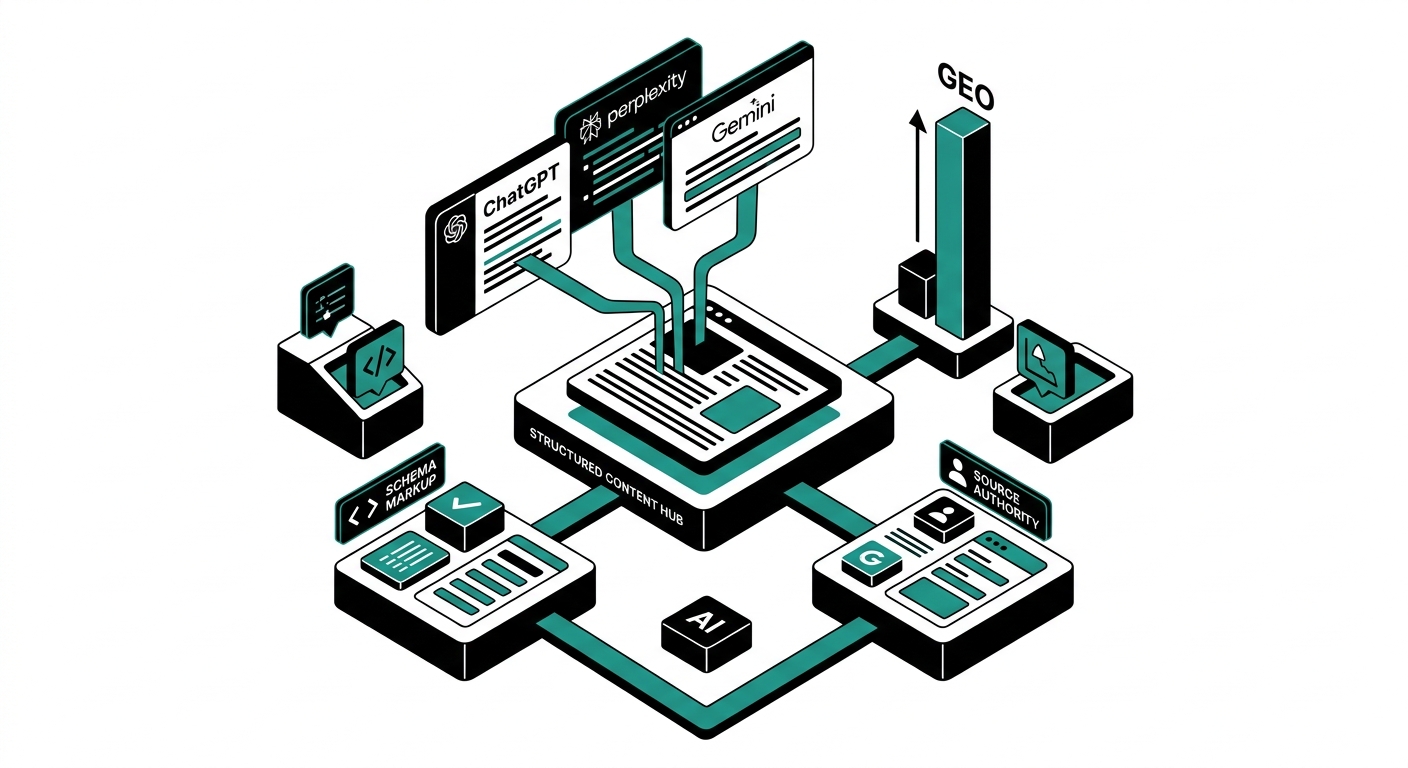
- Generative Engine Optimization (GEO) is the practice of structuring content so AI answer engines like ChatGPT, Perplexity, and Gemini cite your brand, not just rank it in blue links.
- Generative AI traffic grew by 796% year-over-year, and AI-referred visitors convert at up to 15.9% from ChatGPT, compared to a 1.76% average organic search conversion rate.
- Zero-click searches now account for roughly 60% of global searches, making AI citation the new battleground for organic visibility.
- Profound is the most-funded GEO platform, having raised $96M at a $1B valuation, but its Lite plan starts at $499/month and full AI platform coverage requires custom enterprise pricing.
- Otterly.ai is the most accessible entry point at $29/month and was named a Gartner 2025 Cool Vendor for AI in Marketing, serving 20,000+ marketing professionals.
- Ahrefs Brand Radar monitors over 350 million search-backed prompts across 6 AI platforms (ChatGPT, Gemini, Perplexity, Copilot, Google AI Overviews, Google AI Mode) and is included in existing Ahrefs plans.
- Goodie AI reported a 127% increase in AI conversions for Dermalogica and a 335% traffic lift from AI sources for the NoGood agency after adopting its GEO platform.
- Wikipedia accounts for nearly 47.9% of ChatGPT’s top citations, while Perplexity pulls 46.7% of its top citations from Reddit, showing that platform-specific citation logic differs significantly.
- US enterprises dedicated an average of 12% of their budgets to GEO in 2025, with 94% planning to increase that spend.
- When Google’s AI Overview appears on a SERP, organic click-through rates fall by 46 to 58%, making GEO visibility a direct revenue issue, not just a branding one.
AI search has moved from an experiment to a mainstream channel fast. ChatGPT surpassed 100 million weekly active users in record time, Perplexity is routing millions of queries a day, and Google’s AI Overviews are now shown for a significant slice of commercial queries. The brands that show up in those AI-generated answers are not necessarily the ones that spent years building domain authority. They are the ones whose content is structured in a way that retrieval systems can extract, trust, and reproduce.
That is what Generative Engine Optimization is about. GEO differs from traditional SEO in one core way: you are not optimizing to rank on a results page, you are optimizing to be cited inside an answer. The signals AI engines reward include factual specificity, clear entity definitions, authoritative sourcing, structured Q&A formats, and consistent brand presence across the web. None of those are new ideas, but the weight they carry has shifted enormously.
This article covers the best AI tools for GEO and AI search visibility in 2025, with honest assessments of pricing, platform coverage, and who each tool actually serves. Whether you run a startup, an agency, or an enterprise brand, at least one of these belongs in your stack.
1. Profound
Profound is the most well-funded purpose-built GEO platform on the market, having raised $96M in total funding including a Series C in early 2025 at a $1B valuation. The platform is built around a proprietary dataset called Prompt Volumes, which estimates how often specific queries are asked across large language models. That means you are not just seeing whether you appear in AI answers; you are seeing how much search demand exists for the prompts where you do or do not appear.
Profound tracks nine or more AI engines simultaneously: ChatGPT, Gemini, Google AI Overviews, Google AI Mode, Perplexity, Claude, Microsoft Copilot, Grok, and DeepSeek. It also includes Conversation Explorer, which gives access to over 400 million real user prompts pulled from actual AI interactions. For enterprise brands that need to understand the full shape of AI search demand in their category, this is the most complete dataset available.
The platform is SOC 2 Type II certified, making it compatible with the security and data governance requirements of large enterprises. The downside is cost and complexity. Profound provides insight but not execution; you still need separate tools for content creation and traditional SEO.
Pros:
- Tracks 9+ AI platforms including ChatGPT, Gemini, Perplexity, Grok, and DeepSeek
- Prompt Volumes dataset shows real search demand across LLMs, not just synthetic test prompts
- 400M+ real user prompt database via Conversation Explorer
- SOC 2 Type II certified for enterprise security requirements
Cons:
- No free trial; all plans require a sales conversation
- Lite plan ($499/month) only covers one AI platform with limited features
- No built-in content creation or SEO tools; insight only
- Full coverage and API access are enterprise-only at $2,000 to $5,000+/month
Pricing:
- Lite: $499/month – 3 seats, 1 AI platform, 24,000 responses/month analyzed, 2 months of history
- Enterprise: Custom – Full platform coverage, Prompt Volumes, unlimited seats, API access, SOC 2, dedicated Slack support
Visit: tryprofound.com
2. Otterly.ai
Otterly.ai launched in 2024 in Vienna and has grown to over 20,000 marketing professionals, making it one of the fastest-adopted GEO tools in the category. Gartner named it a 2025 Cool Vendor for AI in Marketing, which validates the platform’s positioning without overselling it.
The core workflow is simple: you define prompts and competitor domains, and Otterly runs those prompts daily across your chosen AI platforms, logging what comes back. Over time you get trend data, not just a point-in-time snapshot. That longitudinal view is what separates a real monitoring tool from a one-time check. Otterly tracks brand mentions, website citations, and competitive positioning across ChatGPT, Google AI Overviews, Google AI Mode, Perplexity, Gemini, and Microsoft Copilot.
The GEO Audit feature evaluates pages against 25+ factors covering fluency, authority, and technical structure, giving you a model-by-model breakdown of where you stand. Otterly also integrates with Semrush, which makes it easy to layer GEO data alongside traditional rank tracking. The $29/month entry price is the lowest in this entire category.
Pros:
- Lowest entry price in the GEO category at $29/month
- Gartner Cool Vendor for AI in Marketing 2025
- GEO Audit scores pages across 25+ evaluation factors
- Semrush integration for combined SEO and GEO reporting
- Tracks which specific URLs are cited, not just brand name mentions
Cons:
- Prompt volume caps can be limiting on lower tiers
- No built-in content writing or optimization tools
- Pro tier reaches $989/month, which may be expensive for agencies needing volume
Pricing:
- Lite: $29/month – Basic prompt tracking across select AI platforms
- Standard: $189/month – Full setup for most marketing teams
- Pro: $989/month – High-volume tracking and enterprise features
Visit: otterly.ai
3. Goodie AI
Goodie AI (higoodie.com) is positioning itself at the intersection of GEO monitoring and agentic search optimization. The platform monitors brand visibility across 11 or more AI surfaces simultaneously, including ChatGPT, Google AI Overviews, Google AI Mode, Gemini, Claude, Perplexity, DeepSeek, Grok, Meta AI, and Microsoft Copilot. That breadth of coverage is among the widest of any purpose-built GEO tool.
Beyond tracking, Goodie includes an Optimization Hub, an AEO Content Writer, and an Agentic Commerce Optimizer. The action layer is what sets it apart from pure monitoring tools: you can identify the content gaps that AI engines find in your pages and create structured content to fill them. Goodie also includes sentiment-shift detection, alerting you when the narrative around your brand in AI answers changes tone.
The case studies Goodie has published are notable. Dermalogica saw a 127% AI conversion increase and a 2.5x visibility improvement compared to competitors. The NoGood agency reported a 335% traffic increase from AI sources. These are real-world results, though each brand’s category and starting point will vary.
Pros:
- Monitors 11+ AI surfaces, the broadest coverage in this list
- Includes AEO Content Writer and Optimization Hub for acting on data
- Sentiment-shift detection alerts you to narrative changes in AI answers
- Documented case studies with measurable results
Cons:
- Starting price of $495/month puts it out of reach for small teams
- Pricing scales based on prompt volume, topics, and brand scale
- Less known than Profound or Semrush, limiting community support resources
Pricing:
- Starter: $495/month – Core visibility tracking and optimization features
- Enterprise: Custom – Full prompt volume, full AI platform coverage, custom integrations
Visit: higoodie.com
4. Search Atlas
Search Atlas is built as an all-in-one SEO and GEO platform, integrating traditional keyword research, site auditing, local SEO, and Google Business Profile management with AI visibility tracking in a single dashboard. That makes it a strong choice for teams who want to consolidate tools rather than run a separate GEO-only subscription alongside their existing SEO stack.
The AI visibility features inside Search Atlas track how brands appear across ChatGPT, Gemini, Claude, and Perplexity. You get cross-platform visibility dashboards, sentiment and topic breakdowns, and query-level insights tied to brand presence in LLM-generated answers. The platform also includes OTTO SEO, an AI-powered automation layer that handles technical SEO recommendations, content optimization, and internal link building with minimal manual input.
LLM Visibility is included starting from the Growth plan at $199/month. The 7-day free trial lets you test the platform before committing, and annual billing saves 20%. For agencies managing multiple clients, the $999/month Agency plan includes white-label reporting and multi-site management across the full feature set.
Pros:
- Combines SEO and GEO in one platform, reducing tool sprawl
- OTTO SEO automation reduces manual workload
- 7-day free trial available on all plans
- White-label reporting on the Agency plan
Cons:
- LLM Visibility features require Growth plan ($199/month) or higher
- AI platform coverage (4 engines) is narrower than dedicated GEO tools
- Can feel complex for users who only want GEO tracking without the full SEO suite
Pricing:
- Starter: $99/month – Core SEO tools, no LLM Visibility
- Growth: $199/month – Includes LLM Visibility across major AI platforms
- Pro: $399/month – Expanded limits and features
- Agency: $999/month – White-label, multi-client management
Visit: searchatlas.com
5. Surfer AI Tracker
Surfer SEO has long been the go-to content optimization tool for teams writing SEO-driven articles. In July 2025, Surfer launched a dedicated AI Tracker as a paid add-on inside the existing platform, extending its reach into GEO monitoring. The AI Tracker monitors how often and where your brand, products, or topics appear in answers from ChatGPT (standard and Search modes), Google AI Overviews, Google AI Mode, and Perplexity.
For existing Surfer users, this is the most natural path to adding GEO capability. You keep your content editor, NLP-driven term suggestions, Content Score, and internal linking tools, and you layer AI tracking on top without switching platforms. For new users, Surfer’s content optimization features are still best-in-class for creating the kind of structured, specific, factual content that AI engines prefer to cite.
One important distinction: Surfer AI Tracker is a monitoring tool, not a GEO strategy platform. It tells you where you appear, but combining it with Surfer’s content editor is where you get the full value loop: track where you are missing, write content that fills the gap, watch your AI citations grow.
Pros:
- Native integration with Surfer’s content editor creates a closed optimization loop
- Well-established platform trusted by thousands of content teams
- AI Tracker covers ChatGPT, Google AI Overviews, AI Mode, and Perplexity
- Real-time Content Score helps structure content the way AI engines prefer
Cons:
- AI Tracker is a paid add-on, not included in base plans
- Only covers 4 AI platforms, versus 6 to 11 for dedicated GEO tools
- Not ideal if you need GEO monitoring without a content writing workflow
Pricing:
- Essential: $89/month – Core content optimization, no AI Tracker
- Scale: $129/month – Team features and priority support
- Enterprise: Custom – AI Tracker add-on pricing available on request
Visit: surferseo.com
6. Writesonic GEO
Writesonic started as an AI writing platform and has been evolving into a full GEO stack: content creation, AI search tracking, sentiment analysis, and citation gap analysis in one platform. For teams that want to both create content and track its performance in AI answers without managing two separate tools, this is one of the more complete options in the mid-market.
The AI Search Tracking features begin at the Professional plan ($249/month) and cover ChatGPT, Perplexity, and Google AI Overviews. The Advanced plan ($499/month) adds a fourth platform. Enterprise plans extend to ChatGPT, Perplexity, Gemini, Google AI Overviews, Google AI Mode, Claude, Microsoft Copilot, and Grok. The platform also includes bot crawler analytics, which monitor actual AI bot visits at the page level rather than just simulating prompts.
One strength of Writesonic’s GEO implementation is its Action Center, which prioritizes recommendations by effort and impact. Instead of a dashboard full of metrics, you get a ranked list of the content changes most likely to move your AI visibility. That prioritization saves significant time for teams that are new to GEO and unsure where to start.
Pros:
- Combines content writing and GEO tracking in one platform
- Action Center prioritizes optimization tasks by effort and impact
- Bot crawler analytics track real AI bot visits at page level
- Citation gap analysis shows which sources AI engines cite instead of you
Cons:
- GEO tracking only begins at $249/month Professional plan
- Full AI platform coverage limited to Enterprise tier
- Prompt volume caps (100/month on Professional, 200/month on Advanced) can be restrictive
Pricing:
- Lite: $49/month – Content creation only, no AI search tracking
- Professional: $249/month – AI tracking for 3 platforms, 100 prompts/month
- Advanced: $499/month – 4 platforms, 200 prompts/month, expanded analytics
- Enterprise: Custom – All platforms, unlimited prompts
Visit: writesonic.com
7. Semrush AI Visibility Toolkit
Semrush released its AI Visibility Toolkit in 2025 as part of a broader push to bridge traditional SEO and GEO within its existing platform. For the tens of thousands of marketing teams already on Semrush, this is the lowest-friction way to start measuring AI search presence without adopting a new vendor.
The toolkit gives you an AI Visibility Score (0 to 100) for your domain, tracking brand mentions, cited pages, and citation share across ChatGPT, Perplexity, Google AI Mode, and Gemini. The Prompt Research feature reveals the exact queries users are typing into AI platforms, giving you the raw material for content gap analysis. An AI Search Site Audit checks your pages for technical issues that might prevent AI crawlers from accessing your content.
Semrush is used by over 10 million marketing professionals and integrates AI visibility data directly alongside keyword rankings, backlink analysis, and competitor research. For teams that do not want to manage a standalone GEO tool, folding AI tracking into an existing Semrush subscription is the most practical path. Note that the AI Visibility Toolkit is included in Semrush’s higher-tier plans; entry-level plans do not include it.
Pros:
- Integrates GEO data alongside traditional SEO in a single dashboard
- AI Visibility Score gives a clear 0 to 100 benchmark for tracking progress
- Prompt Research surfaces the exact questions users ask AI engines
- AI Search Site Audit identifies crawler accessibility issues
Cons:
- AI Visibility Toolkit is not included in base plans
- Covers 4 AI platforms, fewer than dedicated GEO tools
- Less specialized than purpose-built GEO platforms for heavy monitoring use cases
Pricing:
- Pro: $139.95/month – Core SEO tools, AI Visibility Toolkit not included
- Guru: $249.95/month – Includes AI Visibility features for most teams
- Business: $499.95/month – Full feature access, API, extended limits
- Enterprise: Custom – Dedicated support, custom reporting
Visit: semrush.com
8. Ahrefs Brand Radar
Ahrefs Brand Radar is a standout in this category for one specific reason: its prompts are derived from real user behavior, not synthetic test queries. Ahrefs built its prompt dataset from Google’s People Also Ask corpus and its own 110 billion keyword database, so when Brand Radar tests how your brand appears in AI answers, it is testing against questions people actually ask, not questions a tool engineer invented.
The platform monitors over 350 million search-backed prompts across six AI platforms: ChatGPT, Google Gemini, Perplexity, Microsoft Copilot, Google AI Overviews, and Google AI Mode. You can also set up custom prompts to track specific queries relevant to your niche or product category. A December 2025 update added TikTok and Reddit tracking alongside YouTube, making Brand Radar a multi-channel visibility tool that goes beyond pure AI engines.
Brand Radar is included in existing Ahrefs plans, which makes it the best value for teams already subscribed. Ahrefs also offers a free AI Visibility Checker for brands that want a one-time snapshot of their AI presence before committing to a paid plan.
Pros:
- 350M+ prompts derived from real search behavior, not synthetic queries
- Included in existing Ahrefs plans at no extra cost
- Free AI Visibility Checker available without a subscription
- Tracks TikTok, YouTube, and Reddit alongside AI engines
- Custom prompt tracking for niche-specific monitoring
Cons:
- No built-in content optimization or action recommendations
- Full Brand Radar features require an Ahrefs paid subscription
- Less focused on sentiment analysis compared to Goodie or Profound
Pricing:
- Free: AI Visibility Checker (one-time snapshot, no account required)
- Lite: $129/month – Brand Radar included
- Standard: $249/month – Expanded limits and full Brand Radar access
- Advanced: $449/month – Full suite access
- Enterprise: Custom – API access and custom data exports
Visit: ahrefs.com/brand-radar
9. BrightEdge AI Catalyst
BrightEdge is the enterprise SEO platform used by more than 8,500 brands, including 57% of the Fortune 100. AI Catalyst is BrightEdge’s answer to GEO: it adds AI search visibility tracking to the platform’s existing DataCube, which is described as the largest independent search data index in the industry covering billions of pieces of content.
With AI Catalyst, enterprise teams can track brand presence and sentiment across Google AI Overviews, ChatGPT, and Perplexity simultaneously. The integration with BrightEdge’s Hyper Cube gives customers geographic and device-specific segmentation on AI visibility data, a level of analytical depth that most standalone GEO tools do not offer. Content recommendations from BrightEdge’s Copilot and Autopilot features tie traditional SEO recommendations to AI-readiness scoring.
BrightEdge is not for small teams. Plans start at $2,500/month and scale to $15,000+/month for full AI suite access. It is built for companies with dedicated SEO teams who need one platform to manage search and AI visibility at scale. If your organization already uses BrightEdge for enterprise SEO, AI Catalyst is the natural extension.
Pros:
- Trusted by 57% of Fortune 100 companies
- DataCube provides one of the largest search data indexes available
- Geographic and device segmentation on AI visibility data
- Integrated with content creation tools (Copilot and Autopilot)
Cons:
- Starting price of $2,500/month makes it inaccessible for most teams
- Only tracks 3 AI platforms (ChatGPT, Perplexity, Google AI Overviews)
- Overkill for teams that only need GEO monitoring without full enterprise SEO
Pricing:
- Enterprise: $2,500/month and up – Full SEO platform plus AI Catalyst; custom pricing scales with usage
Visit: brightedge.com
10. Evertune
Evertune is a dedicated GEO platform built specifically for brands that want to understand and improve how they appear in AI-generated answers at scale. The platform focuses on analyzing AI responses at scale and delivering actionable insights, with a particular emphasis on helping brands move from passive monitoring to active optimization of their AI narratives.
What distinguishes Evertune from basic monitoring tools is its focus on sentiment and narrative quality inside AI answers, not just binary mention/no-mention tracking. The platform can identify how AI engines describe your brand, compare that narrative against competitor descriptions, and surface the specific content changes most likely to shift the narrative in your favor. For brands in competitive categories where the way AI frames you matters as much as whether you appear at all, this depth of analysis is genuinely useful.
Evertune targets enterprise and mid-market brands. It integrates with existing marketing workflows and offers reporting structures that connect AI visibility data to broader brand KPIs. Pricing is not publicly listed, which is typical for enterprise-focused GEO platforms at this stage of the category’s development.
Pros:
- Deep narrative and sentiment analysis within AI-generated answers
- Focuses on actionable insights rather than raw data dashboards
- Designed for brands that need to manage AI representation at scale
- Integrates with broader marketing workflows and brand KPI reporting
Cons:
- No public pricing, requires a sales conversation
- Less established than Profound or Semrush in the market
- Community resources and third-party reviews are limited compared to larger platforms
Pricing:
- Enterprise: Custom – Contact for pricing based on brand size, prompt volume, and platform coverage
Visit: evertune.ai
How We Evaluated These GEO Tools
We assessed each tool on five criteria: AI platform coverage (how many engines it monitors), data methodology (real-world prompts vs. synthetic queries), action layer (does it help you optimize, or just observe), pricing accessibility, and practical fit for different team sizes. We gave extra weight to tools with documented case studies, transparent pricing pages, and credible third-party validation like Gartner recognition or significant enterprise adoption.
We did not rank tools purely by feature count. A tool with ten features that are hard to act on is less useful than one with three features that are directly tied to content changes you can make this week. Pricing transparency was also a factor: if a platform requires a sales call before you can understand what you will pay, that is a friction point worth noting for teams evaluating options.
Which Tool Should You Choose?
| If you are… | Best fit |
|---|---|
| A small team or solo marketer with a limited budget | Otterly.ai ($29/month) or Ahrefs Brand Radar (free tier) |
| An existing Ahrefs user wanting to add AI tracking | Ahrefs Brand Radar (already included in your plan) |
| An existing Semrush user wanting GEO data | Semrush AI Visibility Toolkit (Guru plan) |
| A content team that writes and tracks in one workflow | Writesonic GEO or Surfer AI Tracker |
| An agency managing multiple clients | Search Atlas (Agency plan) or Otterly.ai (Pro) |
| A mid-market brand with a GEO budget | Goodie AI or Search Atlas |
| A Fortune 500 company with dedicated data teams | Profound or BrightEdge AI Catalyst |
Frequently Asked Questions
What is the difference between GEO and SEO?
Traditional SEO focuses on ranking your pages on a search results page so users click through to your site. GEO focuses on getting AI answer engines like ChatGPT, Perplexity, and Google’s AI Mode to cite your content inside generated answers. The signals are different: GEO rewards factual specificity, entity clarity, structured Q&A formatting, and consistent brand presence across authoritative sources, while traditional SEO leans more heavily on backlink authority and keyword density. The two disciplines overlap, but optimizing for one does not automatically improve the other.
Do I need a GEO tool if I already use an SEO platform?
If your existing SEO platform (Semrush, Ahrefs, Surfer) has added AI visibility features, you may be able to start there. Semrush’s Guru plan and Ahrefs’ Brand Radar both include AI tracking without requiring a new vendor. For deeper monitoring across more AI engines, or for brands in categories where AI citations are already a revenue issue, a dedicated GEO tool like Profound, Otterly, or Goodie AI will give you more signal to act on.
How do AI engines decide which sources to cite?
AI engines use retrieval-augmented generation (RAG): when a user submits a prompt, the system searches the web for relevant content, then uses that retrieved content to generate an answer. The content most likely to be retrieved and cited is specific, well-structured, factually dense, from identifiable publishers, and regularly updated. All three major platforms have confirmed this: editorial quality signals matter, not just raw link popularity.
What is the cheapest way to start with GEO tracking?
Ahrefs offers a free AI Visibility Checker that gives you a snapshot of your brand’s presence across major AI platforms without creating an account. Otterly.ai starts at $29/month for ongoing monitoring with daily prompt tracking. Both are valid starting points before committing to a larger platform.
Is Reddit important for AI search visibility?
Yes, and increasingly so. Reddit shows up in ~40% of results across AI Mode, AI Overviews, ChatGPT, and Perplexity across AI Mode, AI Overviews, ChatGPT, and Perplexity, often ahead of brand websites. Perplexity pulls 46.7% of its top citations from Reddit. Building an authentic presence in relevant subreddits and ensuring your brand is discussed accurately there is a genuine GEO strategy, not just a community marketing tactic.
How long does it take to see results from GEO optimization?
GEO is not a quick fix. AI engines update their training data and retrieval indexes on varying schedules. Content changes you make today may take 4 to 12 weeks to show up in AI answers consistently, though tools like Perplexity that rely on real-time web retrieval can update faster. The most consistent approach is publishing specific, well-sourced, frequently updated content and tracking your AI visibility trend over a 90-day horizon rather than looking for week-over-week swings.
Which AI platforms should I prioritize for GEO?
Start with ChatGPT and Google AI Overviews, since ChatGPT held 82.6% share of generative AI traffic in 2024 to 2025, and Google AI Overviews affect click-through rates across billions of traditional Google searches. Add Perplexity if your audience skews toward research-heavy or technical queries. Gemini and Microsoft Copilot are worth monitoring if your brand has significant presence on YouTube or Microsoft enterprise products, respectively.
Can GEO optimization hurt my traditional SEO?
Not if done correctly. Most GEO best practices are also good SEO practices: clear entity definitions, factual specificity, structured content, authoritative sourcing, and regular updates. The formatting preferences do differ slightly; GEO content often benefits from Q&A structure and summary-style sections that traditional SEO sometimes undervalues. The two disciplines reinforce each other more often than they conflict.
What content formats work best for AI citations?
AI engines favor content that is chunked, specific, and self-contained. Clear headings with direct answers underneath them, bullet points for lists of facts, tables for comparisons, and FAQ sections with two-to-five sentence answers all perform well. Content that defines entities clearly, cites its sources inline, and includes specific data points with dates and percentages is more likely to be extracted and reproduced inside an AI-generated answer than vague editorial prose.
The GEO category is still early. Tools that exist today will expand their platform coverage, add more action-oriented features, and consolidate. The platforms that have the best foundation right now are the ones with real-world prompt data (Ahrefs), strong enterprise trust (Profound, BrightEdge), or a genuine action layer that connects monitoring to content improvement (Goodie, Writesonic, Search Atlas). Pick based on your team size, budget, and whether you need monitoring alone or a full optimization workflow. Start tracking now; the brands building AI citation habits in 2025 will be the ones with a structural advantage when the channel matures.