Key Takeaways
- Midjourney v7 (released April 2025) delivers the strongest artistic and aesthetic image quality with a 40% reduction in anatomical errors compared to v6.
- Stable Diffusion 3.5 is fully open-source, offers maximum control, and costs zero dollars per month for personal use with local installation.
- Adobe Firefly prioritizes commercial safety by training exclusively on licensed content, making it the safest choice for professional brands.
- Midjourney pricing starts at $10/month for the Basic plan with 3.3 GPU hours, while paid plans offer up to 60 GPU hours at $120/month.
- Stable Diffusion requires technical knowledge to run locally but eliminates per-image costs and subscription fees for serious users.
- Adobe Firefly’s standard plan costs $9.99/month (promotional pricing until March 15, 2025) with unlimited image generation for Creative Cloud subscribers.
- Midjourney cannot render text reliably and prohibits API access, making it unsuitable for developers seeking automation.
- Stable Diffusion excels at stylistic diversity and community-driven custom models, attracting users who need creative flexibility.
- Adobe Firefly integrates directly into Photoshop and other Creative Cloud apps, streamlining professional workflows.
- The expert approach uses multiple platforms: Midjourney for artistic ideation, Stable Diffusion for control, and Firefly for commercial projects.
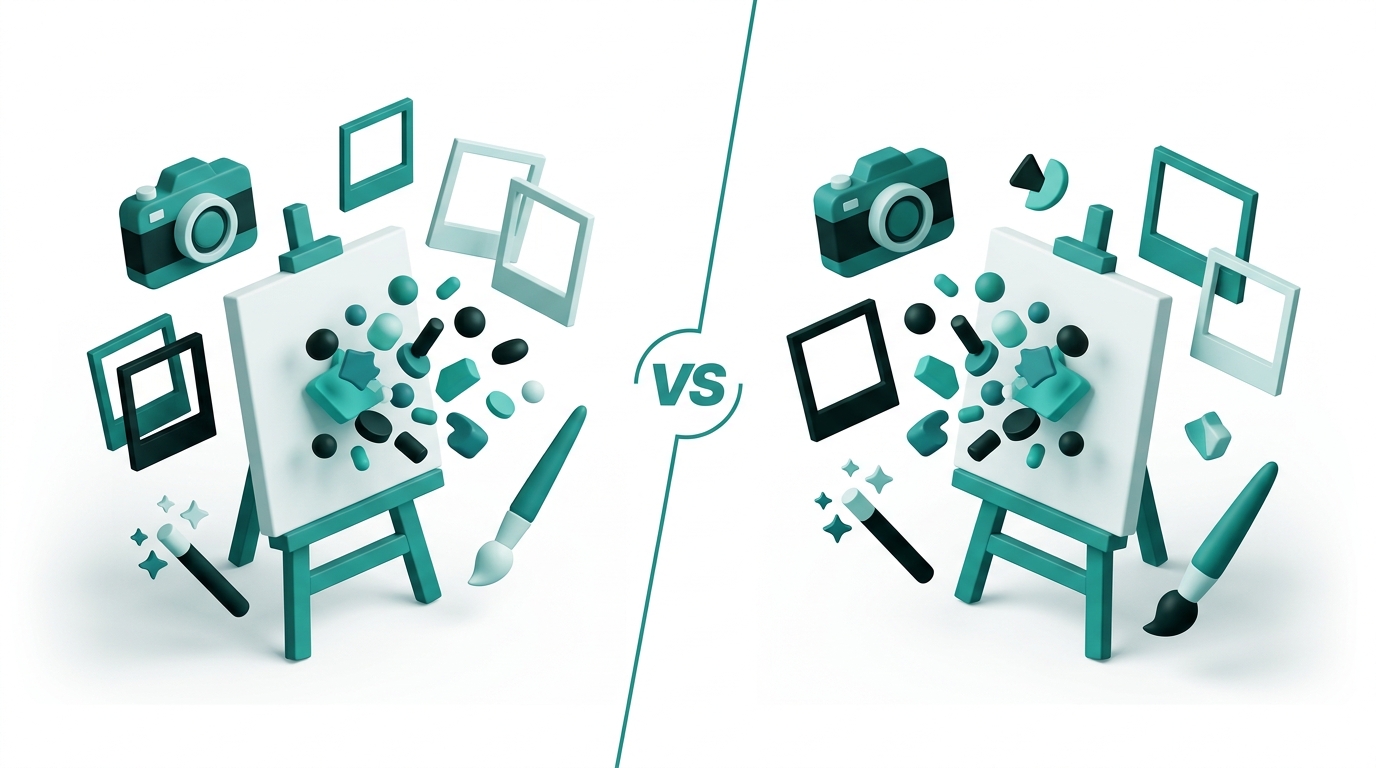
Three tools dominate the AI image generation landscape in 2025: Midjourney, Stable Diffusion, and Adobe Firefly. Each approaches the challenge differently. Midjourney wins on ease of use and aesthetic quality. Stable Diffusion appeals to developers and artists who demand control. Adobe Firefly targets creative professionals who need legally safe, brand-compatible images. Understanding their strengths and limitations helps you choose the right tool for your specific project.
The AI image generation space has matured significantly. These three tools represent the most capable, widely-used, and actively-developed options available. They address different user needs and philosophies. Whether you are a freelance designer, marketing team, software developer, or solo creator, one of these platforms likely fits your workflow and budget.
Quick Comparison: Three Image Generators Side by Side
| Feature | Midjourney | Stable Diffusion | Adobe Firefly |
|---|---|---|---|
| Starting Price | $10/month (Basic) | Free (local), $10 (DreamStudio) | $9.99/month (Standard) |
| Image Quality | Exceptional artistic quality | High, customizable via models | Professional, photorealistic |
| Ease of Use | Very easy, Discord-based | Steep learning curve locally | Easy, Creative Cloud integration |
| Commercial License | Included on Pro/Mega plans | Free for personal, paid for commercial | Included with subscription |
| API Access | Not available | Yes, full automation support | Limited, via Creative Cloud APIs |
| Best For | Artists, concept designers | Developers, power users | Professional designers, agencies |
| Text Rendering | Poor, unreliable | Varies by model, generally weak | Better than competitors |
| Training Data | Web crawl, disputed copyright | LAION, open-source | Licensed content only |
| Interface | Discord community | Web UI or local installation | Web and Photoshop plugins |
| Free Trial | None (2025) | Yes, generous free tier | Limited free tier available |
What is Midjourney?
Midjourney is a closed-source, subscription-based AI image generator operated through Discord. Users type text prompts in a Discord channel, and the platform returns AI-generated images within seconds to minutes depending on the GPU hours available in their subscription tier. The tool became the industry standard for artistic quality and has maintained that reputation through consistent model improvements.
Midjourney v7, released in April 2025, represents the platform’s latest flagship model. It improved prompt understanding by 35%, reduced hand and face errors by 40%, and made generations approximately 20 to 30% faster than the previous version. The platform introduced “Draft Mode” which generates images at half the GPU-minute cost, enabling faster ideation and experimentation. Midjourney also launched a new web interface alongside its Discord presence, though the Discord community remains the primary platform.
The pricing structure offers four tiers: Basic at $10/month (3.3 GPU hours), Standard at $30/month (15 GPU hours), Pro at $60/month (30 GPU hours), and Mega at $120/month (60 GPU hours). All plans offer a 20% discount for annual billing. The tool prioritizes privacy on higher tiers, with Stealth Mode available only on Pro and Mega plans. Unlike many competitors, Midjourney no longer offers free trials, requiring new users to commit to a paid subscription.
What is Stable Diffusion?
Stable Diffusion is an open-source image generation model released by Stability AI. Unlike Midjourney, it can be downloaded and run on personal computers, used through web interfaces, or accessed via cloud services. This open-source nature fundamentally changes the user experience and cost structure. Developers can fine-tune models, integrate the technology into custom applications, and maintain complete control over image generation without relying on external servers.
Stable Diffusion 3.5, released in 2025, offers improved image quality and expanded stylistic capability. The SDXL (Stable Diffusion XL) model remains popular for its superior output compared to earlier versions. These models are free to download and use for personal purposes. Commercial use beyond $1 million in annual revenue requires either a free registration with Stability AI or a paid Enterprise License. DreamStudio, Stability AI’s official online interface, provides 25 free credits on account creation and charges a minimum of $10 for 1,000 additional credits.
Running Stable Diffusion locally requires technical knowledge, GPU resources (minimum 4GB VRAM, preferably 8GB or higher), and familiarity with command-line tools or interfaces like ComfyUI. The upfront learning curve is steep compared to Discord-based Midjourney, but the long-term cost advantage favors serious users. A developer generating 500 or more images monthly pays for the GPU equipment within a year. The community has created thousands of custom models, LoRAs, and extensions that expand capability far beyond the base model.
What is Adobe Firefly?
Adobe Firefly is a proprietary image generation tool integrated into Creative Cloud and available as a standalone web application. Adobe’s defining commitment is training Firefly exclusively on content where they hold rights or have obtained permission, avoiding the copyright complications that plague Midjourney and partly affect Stable Diffusion. This approach makes Firefly attractive to commercial entities and brands that prioritize legal safety.
Firefly 3, the latest version, excels at photorealistic image generation and professional workflows. The tool generates consistent, high-quality results that integrate seamlessly into design projects. Adobe’s training data strategy does not include user-generated content or internet scrapes, which reduces the risk of inadvertently infringing intellectual property. The platform is purpose-built for creative professionals working within Adobe’s ecosystem.
Pricing for standalone Firefly includes a Standard plan at $9.99/month (promotional pricing through March 15, 2025) and a Pro plan at $29.99/month. Both plans provide unlimited access to standard image and vector generation features. Premium video generation uses a credits system: 2,000 monthly credits for Standard and 7,000 for Pro, with additional credits purchasable as needed. Starting June 17, 2025, Adobe Creative Cloud All Apps will be renamed Creative Cloud Pro and include Firefly access at no additional cost, though premium video and audio features require generative credits. The integration with Photoshop, Illustrator, and other apps streamlines workflows for professional designers and agencies.
Image Quality Comparison
Photorealism
Midjourney v7 and Adobe Firefly compete for photorealism excellence, but they optimize for different goals. Midjourney delivers photorealism with intentional artistic direction, adding mood and atmosphere that elevates beyond simple realism. Adobe Firefly prioritizes practical photorealism designed to integrate into professional projects. Neither consistently outperforms the other; the difference comes down to aesthetic philosophy. Stable Diffusion’s photorealism quality varies significantly depending on the specific model used and the quality of the training data underlying that model.
Artistic and Stylized Images
Midjourney dominates artistic image generation. The platform’s core strength is creating imaginative, stylized imagery with strong composition, lighting, and color harmony. The model demonstrates an intuitive understanding of artistic principles that consistently produces intentional-feeling artwork. This aesthetic sensibility attracts digital artists, concept designers, and creative professionals who prioritize mood and style. Stable Diffusion excels in stylistic diversity due to its expansive community of custom models and LoRAs. If you want to experiment with specific art movements, historical styles, or niche aesthetics, Stable Diffusion’s community-driven approach offers more options. Adobe Firefly occupies the middle ground, producing solid artistic results but without Midjourney’s distinctive sensibility.
Text in Images
Text rendering remains a weakness across all three tools, but Adobe Firefly performs better than its competitors. Midjourney struggles with text accuracy and often produces illegible or corrupted text. Stable Diffusion’s text quality depends on the specific model, though most versions struggle with complex text. Adobe Firefly’s training approach has produced slightly better text accuracy, though it still fails on complex prompts. If your project requires readable text within images, none of these tools are fully reliable. Post-processing with traditional graphic design tools remains the safe approach.
Consistency Across Generations
Stable Diffusion allows users to seed generations for consistency, enabling the creation of variations on a theme with controlled randomness. Midjourney offers less control over consistency but generally produces coherent series when using similar prompts. Adobe Firefly provides moderate consistency within professional projects. For projects requiring variations on a single concept, Stable Diffusion’s seeding capability provides an advantage. Users seeking perfect consistency often use Midjourney’s outpainting and upscaling features to refine a single strong generation rather than relying on consistency across new generations.
Pricing Compared
Midjourney operates a simple four-tier subscription model:
- Basic Plan: $10/month or $96/year (monthly equivalent: $8) includes 3.3 GPU hours per month. This tier suits casual users generating under 200 images monthly.
- Standard Plan: $30/month or $288/year (monthly equivalent: $24) includes 15 GPU hours and unlimited image generation in Relax Mode. This is the most popular tier for serious hobbyists.
- Pro Plan: $60/month or $576/year (monthly equivalent: $48) includes 30 GPU hours, private image storage via Stealth Mode, and commercial use rights.
- Mega Plan: $120/month or $1,152/year (monthly equivalent: $96) includes 60 GPU hours, maximum Stealth Mode privacy, and commercial rights for professional teams.
The 20% annual discount applies across all tiers. GPU hours represent fast generation time; Relax Mode on Standard, Pro, and Mega plans allows unlimited slower generations once GPU hours are exhausted.
Stable Diffusion has the most flexible pricing model:
- Local Installation (Free): Download the model and run it on your own hardware. The only cost is the GPU equipment you supply. This is optimal for developers and users willing to invest in hardware (graphics cards cost $300 to $3,000 depending on capability).
- DreamStudio Web UI: 25 free credits upon signup, then $10 minimum purchase for 1,000 credits. Each generation costs credits depending on resolution and parameters. Approximately 100 to 300 images per $10 spent depending on settings.
- Community Platforms: Services like Replicate, RunPod, or local ComfyUI setups offer variable pricing from free tiers to monthly subscriptions ($5 to $50/month depending on usage).
For users generating fewer than 200 images monthly, Midjourney Basic at $10/month is cheaper than owning a GPU. For serious users generating 500+ images monthly, a local Stable Diffusion setup pays for itself within one year.
Adobe Firefly provides bundled and standalone options:
- Standalone Standard Plan: $9.99/month (promotional pricing through March 15, 2025, expected to increase). Includes unlimited standard image and vector generation with 2,000 generative credits monthly for premium features.
- Standalone Pro Plan: $29.99/month or $300/year includes 7,000 generative credits monthly (approximately 70 five-second videos).
- Creative Cloud Integration (June 2025): Creative Cloud Pro (formerly All Apps) includes unlimited standard Firefly features at no additional cost, making Firefly free to existing Creative Cloud subscribers.
For designers already using Creative Cloud, Firefly becomes cost-effective. For casual users not currently subscribed to Creative Cloud, the $9.99/month standalone tier is competitive with Midjourney Basic.
Ease of Use
Midjourney prioritizes simplicity. Users navigate to their Discord server, type a command like “/imagine prompt: a serene mountain lake at sunset,” and the platform generates images without technical complexity. The interface requires minimal learning. Results appear within a few seconds to minutes depending on the queue. The Discord-based approach feels social and accessible to non-technical users. This simplicity is Midjourney’s greatest strength for casual creators.
Stable Diffusion’s ease varies dramatically by deployment method. Using a web interface through DreamStudio or community platforms offers moderate simplicity, comparable to Midjourney but with less intuitive interface design. Running Stable Diffusion locally is significantly more complex. Users must install Python, CUDA (for GPU acceleration), download the model files (2GB to 10GB), and either use command-line tools or install a graphical interface like ComfyUI. The learning curve deters non-technical users but empowers developers and technically-inclined designers.
Adobe Firefly occupies the middle ground. Accessing Firefly through the web interface is straightforward, though less polished than Midjourney’s Discord integration. Creative Cloud subscribers have the advantage of using Firefly directly within Photoshop and Illustrator, where it feels like a native feature. This embedded approach is actually faster for professional designers already working in Adobe’s ecosystem. For non-Adobe users, the web interface works but feels less integrated than Midjourney or local Stable Diffusion.
Commercial Use and Licensing
Commercial licensing differs significantly among the three platforms, and understanding these differences is critical for professional users.
Midjourney: Images generated on Basic and Standard plans are public. Any user on those tiers cannot claim exclusive ownership. Commercial licensing and private image ownership are exclusive to Pro and Mega plans. This restriction limits Basic and Standard plans to personal projects or portfolio work only. Users planning commercial exploitation of generated images must upgrade to Pro ($60/month minimum). Copyright concerns exist around Midjourney’s training data. In mid-2025, Disney and Universal filed suits alleging that Midjourney trained on copyrighted characters without authorization, suggesting future legal exposure for commercial users.
Stable Diffusion: All models are free for personal use with no restrictions. Commercial use is free for organizations with under $1 million in annual revenue. Organizations exceeding $1 million revenue must register with Stability AI, which is free. A paid Enterprise License becomes necessary only for specific requirements like dedicated support or custom training. This favorable licensing structure makes Stable Diffusion attractive for startups and growing businesses. The open-source nature means users own the code and can audit the technology themselves.
Adobe Firefly: Commercial rights are included with all subscription plans (Standard and Pro). Adobe’s training approach using licensed content minimizes copyright concerns. This transparency is valuable for brands and agencies concerned with legal risk. Creative Cloud subscribers gain automatic commercial rights to Firefly-generated images through their Creative Cloud subscription. This bundled approach simplifies licensing for professional teams already invested in Adobe’s ecosystem.
Who Should Use Which Tool?
Professional Designers and Agencies: Adobe Firefly is the recommended choice. The integration with Photoshop and Illustrator streamlines creative workflows. Commercial rights are included. The training data is legally vetted, reducing risk in regulated industries. If the team already subscribes to Creative Cloud, Firefly becomes cost-effective.
Digital Artists and Concept Designers: Midjourney v7 is the clear winner for artistic quality and ease of use. The platform’s aesthetic sensibility and consistent output quality justify the $60 to $120 monthly investment. Artists seeking to showcase their creative vision benefit from Midjourney’s distinctive style. The learning curve is minimal, allowing artists to focus on prompting rather than technical setup.
Software Developers and Technical Teams: Stable Diffusion is the only practical choice. Developers need API access, automation capabilities, and the ability to fine-tune models. Midjourney explicitly prohibits API access. Adobe Firefly’s API is limited. Only Stable Diffusion provides the flexibility to integrate image generation into custom applications, build pipelines, and maintain control over the generation process.
Marketers and Content Creators: The choice depends on budget and content type. For image-heavy projects under 200 images monthly, Midjourney Basic at $10/month is cost-effective and produces polished results. For video marketing and diverse content needs, Adobe Firefly’s generative credits and video capabilities add value. For experimentation and A/B testing concepts, Stable Diffusion’s free local option eliminates per-image costs.
Hobbyists and Casual Users: Midjourney Basic at $10/month is the easiest entry point. No installation, no technical knowledge required, excellent results. Alternatively, Stable Diffusion through community web UIs (Replicate, RunPod) offers free tiers, making it a cost-free exploration option. Adobe Firefly’s standalone plan is similarly priced but requires less prior knowledge than local Stable Diffusion.
Entrepreneurs and Startups: Stable Diffusion offers the best long-term economics. Favorable commercial licensing for organizations under $1 million revenue, no per-image costs once hardware is acquired, and the ability to embed image generation in commercial products without recurring fees. As the business scales, the cost advantage compounds.
Verdict: Which Image Generator Wins?
There is no single winner. Each tool excels in specific contexts. Midjourney v7 remains the gold standard for artistic image generation and ease of use. Stable Diffusion is unmatched for control, automation, and long-term cost efficiency. Adobe Firefly provides the safest, most legally defensible option for commercial teams with existing Creative Cloud investments.
The expert strategy involves using multiple platforms. Use Midjourney for artistic ideation and concept visualization. Use Stable Diffusion for development projects, automation, and technical control. Use Adobe Firefly for commercial deliverables and brand-safe outputs. This approach costs approximately $100 to $200 monthly depending on usage but provides access to each tool’s unique strengths.
For most users, the recommendation is to start with Midjourney if simplicity and beautiful results matter most, or Stable Diffusion if control and cost are priorities. Try the free tier first. Download Stable Diffusion and experiment locally, or use a community web interface. Sign up for Midjourney’s Basic plan ($10) and test the platform for a month. Many users discover they prefer one tool over others through hands-on experience rather than reading comparisons.
Frequently Asked Questions
Can I use Midjourney images commercially for free?
No. Commercial use requires the Pro plan ($60/month) or higher. Basic and Standard plans generate public images that Midjourney retains rights to. The Pro plan provides commercial rights and private image storage through Stealth Mode.
Is Stable Diffusion truly free?
Yes, for personal use and organizations under $1 million in annual revenue. Local installation requires hardware investment (a graphics card costs $300 to $3,000), but there are no recurring fees. Cloud-based interfaces like DreamStudio charge per usage. The software itself is completely free and open-source.
Which tool generates the best photorealistic images?
Midjourney v7 and Adobe Firefly both excel at photorealism, but with different approaches. Midjourney adds artistic direction and mood to photorealism. Adobe Firefly prioritizes practical photorealism for professional workflows. For strict photorealism, Adobe Firefly slightly edges ahead. For photorealism with artistic flair, Midjourney wins.
Can I run Stable Diffusion without a graphics card?
Technically yes, but performance is poor. Stable Diffusion can run on CPU, but a single image takes 30 to 60 minutes to generate. GPU acceleration is practically required. An RTX 3060 or RTX 4060 (around $300 to $400) provides reasonable performance. For serious use, invest in a graphics card.
Does Midjourney offer a free trial in 2025?
No. Midjourney discontinued free trials and now requires a paid subscription to access any features. The Basic plan at $10/month is the entry point. Stable Diffusion and Adobe Firefly both offer free tiers, making them better options for risk-free exploration.
Is Adobe Firefly available without Creative Cloud?
Yes. A standalone Firefly Standard plan costs $9.99/month with unlimited standard image generation. A Pro plan costs $29.99/month with more generative credits for video. Creative Cloud subscribers gain Firefly access at no additional cost starting June 2025.
Can I use Midjourney or Stable Diffusion via API?
Midjourney explicitly prohibits API access. Stable Diffusion has full API support for developers. Adobe Firefly has limited API access through Creative Cloud developer tools. For automation and development integration, only Stable Diffusion is a reliable option.
Which tool is safest for brands and commercial use?
Adobe Firefly is the safest option. Adobe trains Firefly exclusively on licensed content, minimizing copyright risks. Midjourney faces ongoing copyright litigation. Stable Diffusion has disputed copyright claims from training on the LAION dataset. For risk-averse brands, Adobe Firefly’s transparent approach provides legal certainty.
How fast are these tools for generating images?
Midjourney generates most images in 10 to 60 seconds depending on the tier and queue. Stable Diffusion running locally on an RTX 4080 generates images in 5 to 15 seconds. Adobe Firefly generates images in similar speed to Midjourney. Cloud-based Stable Diffusion services vary from 30 seconds to several minutes depending on queue and hardware.
Which tool offers the best value for money?
For casual users under 200 images monthly: Midjourney Basic at $10/month. For serious power users: Stable Diffusion through local installation after hardware investment. For professional designers using Adobe tools: Creative Cloud Pro (which includes Firefly starting June 2025). The best value depends entirely on your usage level and existing tool ecosystem.
Choosing between Midjourney, Stable Diffusion, and Adobe Firefly depends on your specific needs, budget, and technical comfort. Midjourney offers unmatched ease of use and artistic quality for $10 to $120 monthly. Stable Diffusion delivers maximum control and cost efficiency for developers and power users. Adobe Firefly provides legal safety and Creative Cloud integration for professional teams. Most serious users ultimately benefit from access to all three, each serving a distinct role in creative and technical workflows. Start by identifying your primary use case, then experiment with the free or low-cost tiers before committing to a paid plan.